

The Decision to Kill Khamenei - And the Secret Phase B of the War
Assassinating a head of state is rare in the modern era. Why Israel decided the risk was worth taking - and the three very different paths now open inside Iran

A Difficult Day in Israel
In Beit Shemesh, nine Israelis were killed and dozens more wounded after a direct hit by a ballistic missile in a residential neighborhood. As of this writing, a number of people are still missing. The impact caused part of a shelter to collapse. Last night in Tel Aviv, a Filipina civilian was killed by a direct strike, and dozens were taken to the hospital. U.S. Central Command has announced that since the beginning of the operation, three American soldiers have been killed as a result of Iranian actions.
Much of the world is focused on Ali Khamenei and on the implications of such sweeping assassinations inside Iran. I will address that. But first, I want to convey what I hear from many Israelis: this war, however necessary it may be, is hard. This chapter is extremely hard.
Children had already begun to adjust to a routine in which they were no longer spending their days in safe rooms or shelters. Many believed the worst of the war was behind us. Now the sirens come at all hours. It feels sporadic, unpredictable. Given the nature of some Iranian warheads - including cluster munitions - the potential for lethal outcomes is obvious. Even if you are in a shelter or a reinforced room — though those dramatically increase your chances of survival — there is no absolute protection. The mindset that taking cover in these rooms guarantees protection no longer exists.
Israeli security officials tell me that Israel has so far absorbed roughly one third of Iran’s total launches. The rest have been directed at American and Arab targets across the region. Today, Iran attempted to launch a missile toward Cyprus. How many missiles do they still have? A great many. They have not fired half, or even a third, of their stockpile. The principal effort of the U.S. and Israeli air forces right now is to eliminate as many launchers as possible, as they did here (the people running are Iranian soldiers, according to the IDF):
American and Israeli pilots are operating with complete freedom over Iranian skies — including over Tehran itself.
Some of the footage being released is meant to show the hand-in-glove cooperation between America and Israel. For example, CENTCOM and the IAF both published the same footage of the destruction of IRGC headquarters being destroyed.
Now, to Ali Khamenei and the events of the past forty hours.
Why Did They Decide to Kill Khamenei?
This question is not at all obvious. Assassinations are not universally effective in changing the direction of regimes or terrorist movements. They can lead to internal radicalization, consolidation, and the survival — even the strengthening — of more aggressive elements. This is intervention at the highest level — overtly belligerent, inherently dangerous.
Tactically, the intelligence capability to locate Khamenei was always there. Israel’s Military Intelligence Directorate — the same branch that failed so disastrously on October 7th — provided the overwhelming majority of the information required. Abroad, sources often blur the distinction between the Mossad and military intelligence, AMAN (a simple Hebrew acronym for “Intelligence Wing”). And while the Mossad played its part, both wars were, in large measure (over 90%), AMAN’s work.
Once Iran’s air defenses were almost completely dismantled in June 2025, the challenge became less operational and more about timing — identifying the precise moment to strike.
So what was the thinking that led to the strike?
At its core, the calculation was simple, if stark: what is worse — the leader remaining in power, or the consequences and costs of removing him? The Israeli intelligence community considered this issue in depth. It was debated. Dissenting opinions were heard. The risks were examined seriously.
The general assessment that emerged was that Khamenei — even if he once had a steadier hand — had become a complete liability to regional stability. Not “old and careful,” but “old and rigid,” perhaps even messianic. In that light, he was no longer a stabilizing force but an accelerating, radical one.
They took into account the possibility that he would be replaced by a younger, more fit and capable general from the Islamic Revolutionary Guard Corps — and still concluded that the pros outweighed the cons.
Khamenei’s Failure
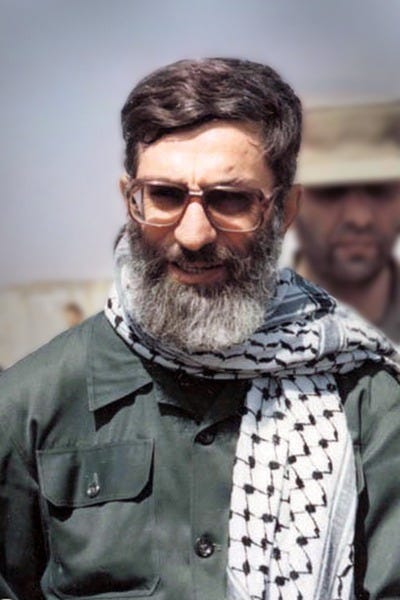
Khamenei devoted his life to a project of death, repression, and zealotry. Unlike the founder of the Islamic Republic Ayatollah Ruhollah Khomeini, he did not know how to bend at the right moment. He failed to grasp that, given the severe condition of his country, there was no longer room to bargain endlessly with the world. He tied Iran to perpetual revolution, to the export of that revolution, and by that to tireless support for terrorism.
.jpg#:~:text=File%20history.%20File:Ayatollah%20Khamenei%20in%20Military%20Uniform,%25%20vertically%20using%20CropTool%20with%20precise%20mode.)
Regional prosperity bypassed his country. Iran faced a deepening currency crisis, collapsing water infrastructure, corrosive corruption, a subsidy-distorted economy, the wounds of sanctions and totalitarian repression. Rarely do the individuals truly responsible for the vast damage of fundamentalism and fanaticism pay a personal price. Usually they are shielded from the consequences of their own policies. Not this time.
The assassination of a sitting head of state in the contemporary era is rare. If the regime survives — even in a more moderate form — it will exact a heavy price from Israel in the future. It will never forget. Israelis understand that after the past two days, regime survival could be especially dangerous for their future security.
Is Israeli Deterrence Restored?
On the mornings of October 7 and 8, Israel discovered that it possessed no effective deterrence. Not only did Hamas attack; Hezbollah followed at Iran’s behest, as did the Houthis in Yemen, and later Iran itself. In a sense, the entire war since that first day has been an Israeli attempt to restore deterrence.
October 7th was a formative moment for Israelis — and a transformative moment for the whole Middle East. Israelis had lived for years with the knowledge that a state — Iran — together with its network of terrorist organizations, was engaged in practical preparations for their destruction. Until a few years ago, Iran insisted (rather thinly) that it did not seek Israel’s physical annihilation. That changed after October 7th. The rhetoric became more extreme. What was implicit became explicit.
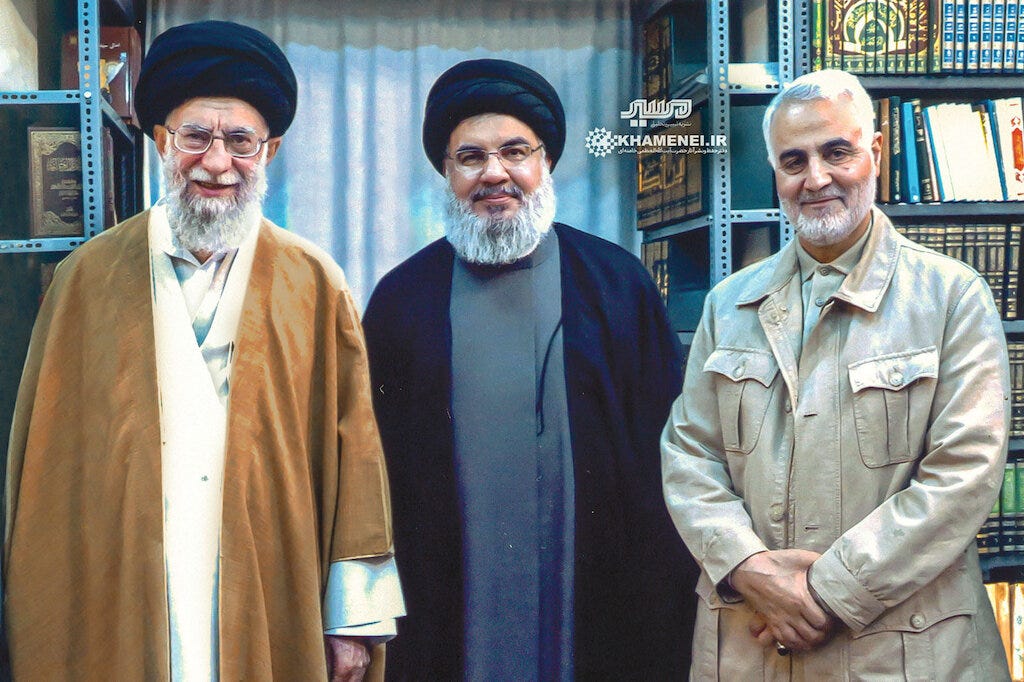
That era is now over: Yahyah Sinwar is dead. Mohammed Deif, his military chief, is dead. Hezbollah’s chief of staff is dead. Hassan Nasrallah is dead. Khamenei and generations of commanders of the Revolutionary Guards are dead. Bashar al-Assad, according to reports, spends his time playing video games in Moscow — and is surely grateful he exited the regional arena when he did.

Still, it is crucial to remember: deterrence is not measured by assassinations or battlefield victories. It is measured by a change in the adversary’s internal perception. That change sometimes follows defeat — and sometimes does not (think about Egypt surprising Israel in 1973, after the devastating defeat of 1967). The true test, in other words, will only be visible in retrospect.
When Will This End?
Israeli security officials tell me they still possess an enormous bank of high-value targets across Iran. Intelligence is shared with the United States, which ultimately determines the scope, timing, and conclusion of the campaign. From Israel’s perspective, operations could and perhaps should continue for more than a week — to meaningfully degrade Iran’s offensive and defensive military capabilities. In the course of intensive dialogue between Jerusalem and Washington, Israel’s Chief of Staff, Lt. Gen. Eyal Zamir, spoke directly with the U.S. President, responding to questions and comments he raised — a reflection of the depth of coordination between the two sides.
How Will This End?
My assessment, based on conversations with senior sources, is that the current operations will unfold in two stages, and we are only in the first.
The goal of this first stage (‘Kinetic’) is the decapitation of the current leadership of the Islamic Republic — and, to the extent possible, those capable of replacing it. This explains, for example, the assassination of former President Mahmoud Ahmadinejad. Any power center rooted in the Islamic Republic is now a target.
In the second stage (‘phase B’) — this is an assessment — there will be a genuine attempt to bring about systemic change of power inside Iran, including through covert means. U.S. and Israeli operations are eroding the regime’s repressive capacity, laying the groundwork for this second stage. The headquarters of Iran’s Ministry of Intelligence — responsible for both foreign espionage and internal repression — has been struck and destroyed. Prime Minister Netanyahu released an AI-generated video of a speech in Persian addressed to the Iranian people, effectively calling on them to rise up. “All I can tell you is that we did not enter this war without thinking very deeply about Iran’s possible futures — and without preparing several steps ahead,” a senior security source told me.
Three Different Scenarios For The Regime
I have written here, here and here about the possible futures for this regime, and how policymakers have considered them in planning this operation. From where we sit today, I see three scenarios that could come to pass:
Scenario #1: the regime seeks a war of attrition, attempting to achieve what it views as “accomplishments” through painful attacks on the United States and Israel. It may calculate that Washington prefers to end the war quickly. Thus survival — coupled with keeping the streets quiet — is enough. In such a scenario, the war ends, the opposition is suppressed during or immediately after it, a successor to the Supreme Leader is chosen — perhaps already selected in secret — and the Islamic Republic survives. This is the most negative scenario, yet all sides consider it entirely plausible.
Scenario #2: an internal transformation within the regime. Change is already underway, given the deaths of the Supreme Leader, the defense minister, the commander of the Revolutionary Guards, and others. But this scenario would produce greater pragmatism — similar to transitions seen elsewhere, where a regime retains its name but shifts direction regarding the United States, regional terrorism, and perhaps, more discreetly, Israel. Jerusalem is deeply skeptical of meaningful internal reform. However, given the vast state apparatus built by the regime, “a Gorbachev is more plausible than a Nelson Mandela,” as one source put it.
Scenario #3: an outright coup or revolution. The military or other forces seize power — or a genuine revolution erupts. A revolution would entail the dismantling of an entire elite layer tied to the Islamic Republic and would initially resemble civil war. A coup — potentially with an army general and public backing — appears, at this stage, the more plausible of the two.
The coming days will determine which of these paths, if any, begins to crystallize.
In all scenarios , please note that the innocent die on all sides.
Iran just started redevelopment of Israel. They are building a giant parking lot. Within a month, Iran should be ready to pour concrete over stupid Jews. Haifa’s port is already demolished…Americans are unable to stop this XXI century modernization of Israel. Soon we will have new National Geographic documentary: “Finding USS Abraham Lincoln (CVN-72)” by Robert Ballard Ph.D. So be patient, stand by and don’t get too excited.