

Why Western Streets Go Silent for Iran
Last night in Queens, demonstrators shouted “We Support Hamas Here” as Iranians fought for freedom; the same worldview that justified October 7 has little room for an Iranian revolt for liberty

Can you hear those thousands of voices, shouting in the streets and on campuses, ‘from the Gulf to the sea: Persia will be free’?
The marches of impressive solidarity with a people striving for liberty?
The dense, widespread intellectual enlightenment in support of the struggle against dictatorship, for human rights in Iran?
What about the voices of demonstrators in the West reminding the world of the mass executions, the systematic discrimination, the brutal oppression of women, the state murder of gay people, the annihilation of minority communities; the torture; the country turned into a brutal theocracy- The Handmaid’s Tale in real life?
Can you hear the solidarity with the Iran uprising? The outrage?
I hear nothing.
Actually, I did hear something.
The demonstration last night, January 8, in Queens, New York City. The demonstrators shouted: “say it loud, say it clear: we support Hamas here!”.
https://x.com/i/status/2009430503582257396
Outside a synagogue in Queens, this is what they chose to do as Iranians fought for their lives and their freedom. Unsurprising - and symbolic.
**
There is a moment in revolutions - a precise and historically recognizable sweet spot - when a brutal and hardened regime still deploys its forces, yet something breaks in its resolve. You can sense it, and then the public senses it: fear has shifted sides. The hunters are sensing that they may become the hunted.
The rulers cannot compete with sheer numbers, with masses filling the streets. Crucially, their own men begin to hesitate. Security forces grow reluctant to shoot at demonstrators, and a spirale begins.
Then, the oppressors - the real oppressors - are exposed. They are, in truth, just men: terrified, cruel and weak men. As frail as Ceaușescu in Romania or Ali Khamenei, the supreme leader in Iran.
Have we reached this moment in Iran? I do not know. But we might be close.
And yet those who preach uprising, resistance, and universalism are quiet when it comes to Iran. This is not a mistake. It is deeply connected to the intellectual legacy of third-worldism and radicalism- an outlook that has treated regimes like Iran and the Islamic Revolution as forms of resistance to capitalism and Western domination. Within that tradition, such regimes are often granted a moral waiver.
The premise is simple: the West is presumed to be the source of all evil, and those who oppose it are therefore excused or celebrated.
This framework collapses when reality intrudes. Faced with the possibility of a genuine revolution in Iran - one led not by militias or armed movements but by citizens demanding liberty - many of these voices do not know how to react. By contrast, after October 7, when Hamas carried out a coordinated attack of mass murder and abductions, parts of the same ideological ecosystem responded with quick justification or outright celebration. It was framed as “resistance.”
Now, when Iranians rise not to kill but to be free, silence prevails.
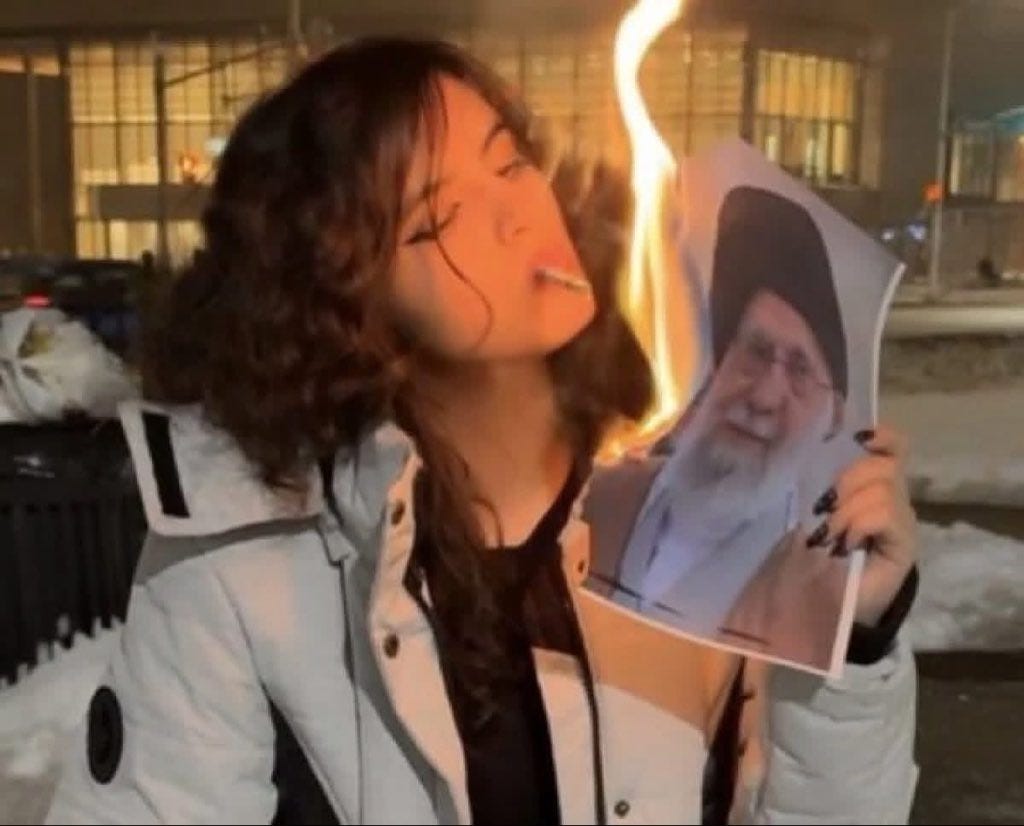
In the radical orthodoxy that has been constructed over decades, the Islamic regime itself belongs to the camp of the oppressed. Those who stand against it are cast as hypocrites: pro-Israel, pro-Western, agents of imperialism. This is the moral failure George Orwell warned against: “Actions are held to be good or bad, not on their own merits, but according to who does them.”
What the Islamic Republic attempted in the late twentieth century was historically unusual: the construction of a modern dictatorship of theocracy, combining clerical rule with the machinery of a contemporary state. That experiment has failed - repeatedly, disastrously - for the people of Iran.
Even if the current uprising does not lead to regime change; even if it is once again crushed by the regime’s brutality, the record is already clear. The failure of the clerical establishment to enable a good life for its citizens, or its well-documented role in exporting violence and terror across the region- these facts alone should have rendered the regime a pariah for anyone who claims to care about human dignity. It should have led people from all walks of life and political opinion to be enthusiastic about seeing a possible fall of a fundamentalist polity.
In the West, “resistance” is often a performance: stylized keffiyehs, campus marches, coffee between classes. In Iran, it is measured in lives risked for freedom and basic rights- and, more importantly, it stands against fundamentalism, not in its service.
In that context, President Trump’s important warning that the regime could face consequences if it murders demonstrators may have an effect.
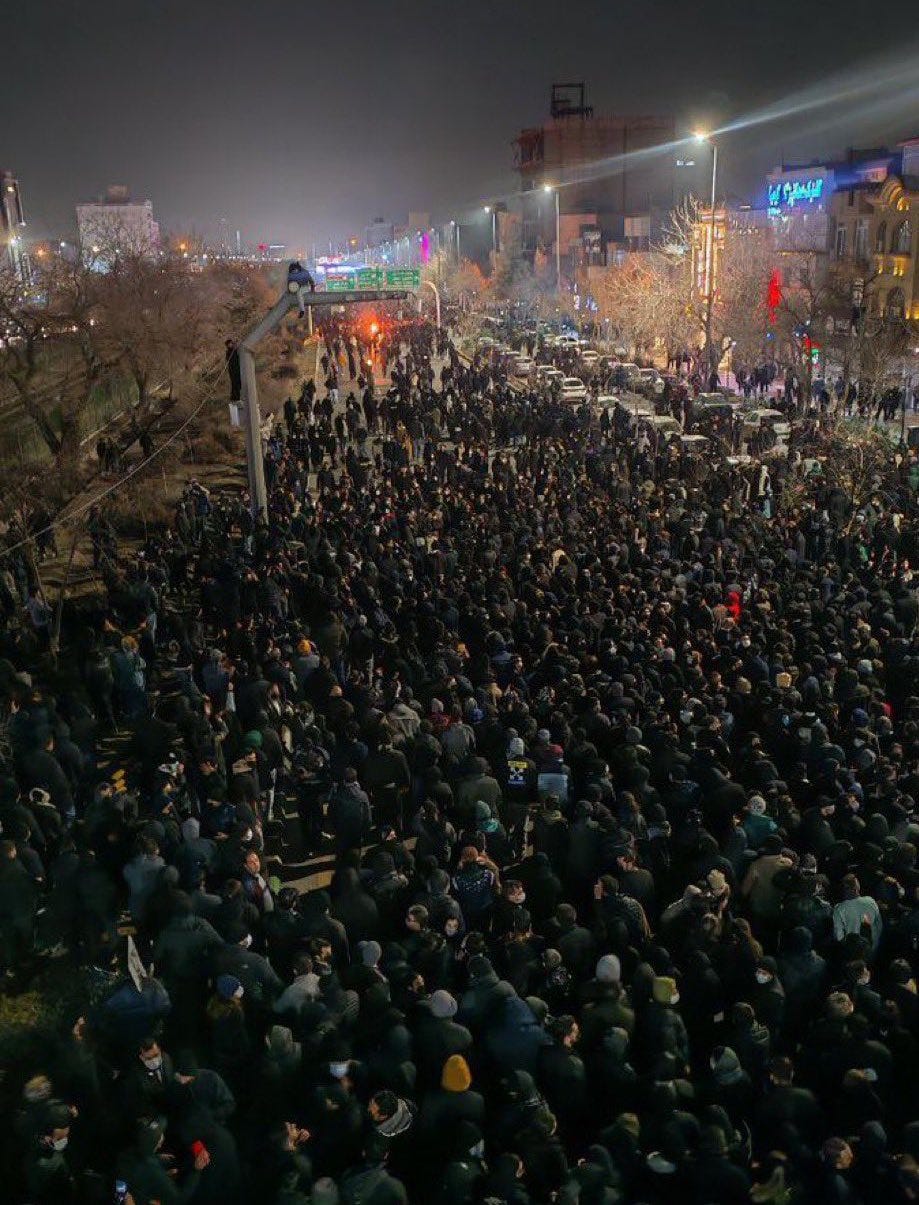
For now, we are left with the hope that Iranians themselves will continue to rise and show extraordinary courage, fighting for the rarest privilege of all: liberty. To emancipate themselves, they do not need the choir of ignorant radicalism, but very much the support of everyone else.
What an exceptional article and summary of not only the courageous efforts by the Iranian people to throw off their chains of oppression, but of the utter silence of the West and how they have flipped the ideals of right and wrong on their moral back side.
Thank you Nadav: Your post is an appropriate capper to what has been a very long night's vigil. We are grateful for the clarity you provide! Gratefully, Gary