

Exclusive: Israel Asked Qatar to Boost Hamas Funding in September 2023
Meetings in Jerusalem reveal efforts to buy calm in Gaza shortly before the Hamas invasion; Qatar told Israel that Hamas does not want an escalation

In early September 2023, an important meeting took place at a hotel in Jerusalem. At that meeting, official Israeli representatives asked a senior Qatari official to increase the transfer of funds to Hamas in Gaza- funds that they knew, and that the Qatari knew, would not reach needy Palestinian families but rather Hamas’s own governing apparatus. Until now, it has been reported- among other places in an investigation published by The New York Times in December 2023 - that Israel asked Doha to continue transferring money to Hamas. It now emerges that Israel went further: it actively sought to increase those transfers, in light of Hamas threats to escalate in the Strip.
To understand how Israel reached the point of pressing for more money to Hamas, one must go back several years. The arrangement between Israel, Qatar, and Hamas (with the blessing of the U.S. and E.U.) began in 2017, after the Palestinian Authority- led by Fatah and Mahmoud Abbas (Abu Mazen) - refused to continue transferring funds to the Hamas regime in Gaza. Israel feared that the resulting financial pressure on Hamas could trigger a security escalation, and Hamas indeed escalated. In March 2018, mass riots erupted along the Israel–Gaza border, involving widespread violence. Qatar stepped in to fill the vacuum, providing the funds needed to sustain the Hamas regime - an affiliate of the Muslim Brotherhood, with which Doha has a particular affinity.
Crucially, Qatar required Israel’s explicit consent to transfer money to Hamas; without Israeli approval, such transfers could have been considered - under U.S. law and by other international standards - aid to a terrorist organization. From that point on, Israel enabled Qatar to formally transfer billions of dollars to the Hamas regime in Gaza. Most of the money, at the beginning, was transferred in bags and suitcases filled with cash.
These funds were initially presented as humanitarian assistance, intended to support poor families and reduce poverty. In practice, however, beginning in 2019 the Israeli Shin Bet repeatedly warned Prime Minister Netanyahu that the money was empowering Hamas. At a later stage, the Shin Bet escalated its warnings, concluding that the funds were being used directly to build Hamas’s military force in the Gaza Strip. Despite these assessments, the policy continued, driven by the overriding priority of maintaining quiet.
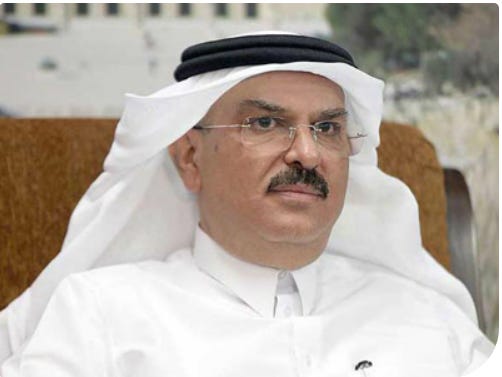
The guest of honor at the September 2023 meeting was Mohammed al-Emadi, the Qatari official who for years had overseen the transfer of hundreds of millions of dollars to Hamas - with the knowledge and approval of successive Israeli governments. Ahead of the meeting, tension prevailed within the security establishment, amid rising friction along the Gaza border and talk of renewing the Hamas planned confrontations along the border, labeled the “Marches of Return.”
That same week, as al-Emadi arrived in Israel, a report circulated within the security establishment that Hamas had begun renewing the “return camps”, the bases to those marches, in northeastern Gaza. It was reparing them with heavy equipment. The date was August 30.
On the Israeli side, acting on behalf of the political leadership, those present at the meeting included the Coordinator of Government Activities in the Territories (COGAT), Maj. Gen. Rassan Alian, Head of the Shin Bet’s Southern District, codenamed “Oscar”- and representatives of other agencies. The purpose was to address Hamas’s claims and demands. The background was a widely shared assessment across the security establishment that Hamas did not want escalation in Gaza and was using friction along the fence as leverage to extract economic concessions.
About a month earlier, another senior Qatari official had entered Gaza to prepare the ground for al-Emadi’s visit. He met with Yahya Sinwar, Rawhi Mushtaha, then a senior figure in Hamas’s political wing in Gaza, and others. Upon leaving the Strip, Israel received the following messages from Qatar: Hamas did not want escalation and was interested in maintaining stability. Sinwar requested an increase in fuel allocations for Gaza’s power plant for August–September due to the summer heat. He also demanded that fuel purchases from Egypt, financed by Qatar, be raised from $3 million per month to $7 or 10$ million. According to these messages, the Qatari diplomat told Hamas that Qatar was not prepared to comply.
This brings into focus the financial mechanism at the heart of the arrangement. In 2021, the Bennett–Lapid government decided to halt direct cash transfers to Gaza and to adopt alternative formulas through which Qatar could assist Gaza without delivering suitcases of money to Hamas. One such method involved prepaid or chargeable cards for families, intended to prevent funds from flowing into Hamas’s military buildup. Experts warned at the time that Hamas would still find ways to divert these resources - and they were correct.
The most sensitive and consequential channel, however, involved fuel. Qatar purchased fuel in Egypt, which was then transferred by trucks into Gaza as “assistance” to the Hamas authorities.
Hamas sold the fuel to gas stations across the Strip. Although the sums involved - between $3 million and $10 million a month - appeared modest, Hamas earned far more through its monopoly and price arbitrage. In effect, Hamas controlled the gasoline market for private vehicles and trucks in Gaza, generating substantial profits. These funds became part of Yahya Sinwar’s and Hamas’s leadership’s war chest, used at their discretion. This money did not reduce poverty; it enabled Hamas to devote its own resources almost entirely to military buildup.
By 2023, tensions emerged between Qatar and Hamas. Without going into the specific causes in this post, Qatar responded by reducing the funds allocated for fuel purchases in Egypt. Israel interpreted Hamas’s renewed threats to ignite border clashes as an attempt to pressure both Qatar and Israel into restoring and increasing the flow of money. Within the Israeli system, this was seen as financial extortion: Hamas using controlled escalation to extract funds.
Accordingly, the escalating situation in Gaza and the renewal of the Marches towards the border- understood in retrospect as a Hamas deception in preperation to the October 7 attack - were interpreted by the Shin Bet, Military Intelligence, and COGAT as leverage aimed at forcing more money into the Strip. The prevailing interpretation was that Hamas was reigniting border confrontations in anticipation of al-Emadi’s arrival.
This is why the early-September meeting in the Jerusalem hotel was so significant. It addressed Hamas’s demands- fuel for the power plant, fuel from Egypt, labor permits, and more. During the meeting, according to three official Israeli sources with direct knowledge of the meeting, and one foreign source - all of whom requested anonymity, Israeli representatives specifically asked the Qatari official to increase fuel purchases from Egypt for Hamas, essentially to ensure the continuation of calm. Al-Emadi could not approve the request on the spot.
Later in September, Mossad chief Dadi Barnea traveled to Doha to discuss the continuation of funding to Hamas. As reported by The New York Times, Qatari officials asked whether they should keep transferring the money, and Barnea replied affirmatively, acting on Prime Minister Netanyahu’s instructions. This is notable because Barnea, even before assuming his post, opposed funding Hamas from the moment he took office.
Netanyahu nevertheless repeatedly set the preservation of quiet in Gaza as the supreme priority - almost at any price - and instructed that this be coordinated with Qatar. This policy rested on two pillars. The first was the belief that the split within Palestinian society between Hamas and the Palestinian Authority serves Israel, as it delays political pressure to establish a Palestinian state — and, in the language of Netanyahu’s associates and he himself, Hamas was an asset. The second reason rested on failed intelligence assessments that Hamas wanted calm, combined with the failure to detect Hamas’s true intentions.
What now emerges is that Israel did not merely agree to the continuation of Qatari funding to Hamas; it actively sought to expand it and provide additional concessions, at Sinwar’s demand, in a desperate effort to buy quiet.
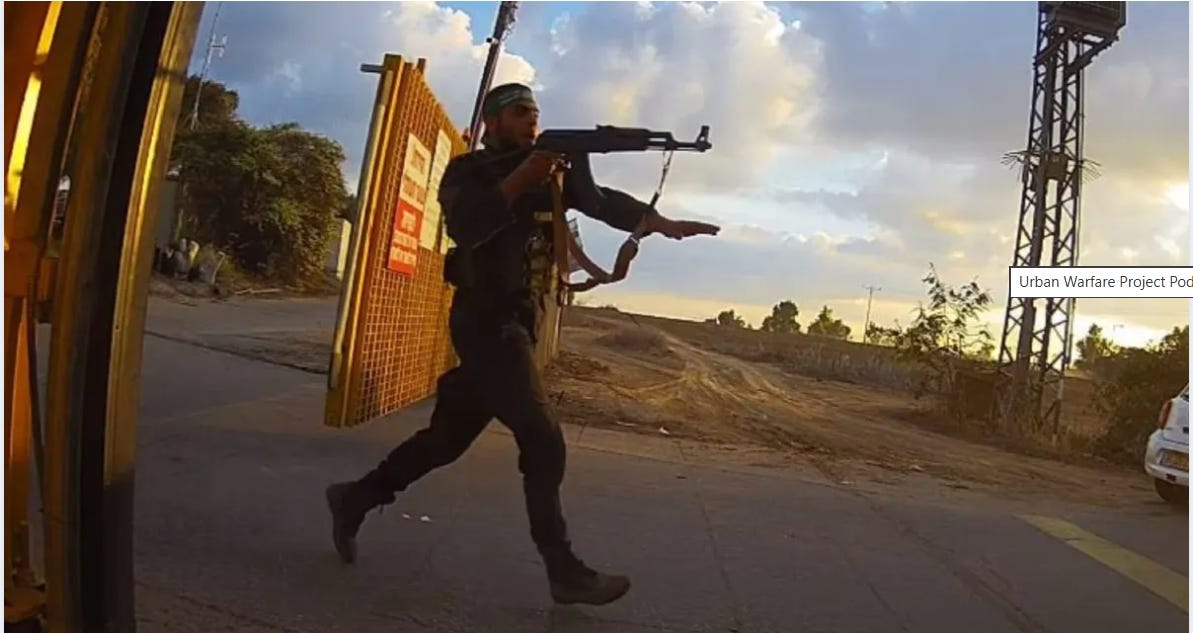
In reality, Hamas was doing something else entirely: accumulating as much cash and financial capacity as possible, while deliberately misleading Israel into believing that its focus was economic stabilization and extortion for funds. Behind this façade, Hamas was preparing its mass murder operation inside Israel.
The Prime Minister’s Office, the Shin Bet, and the Coordinator of Government Activities in the Territories declined to comment on my report. It was originally published this morning, in Hebrew, in Yediot Ahronot.
Wow! I have listened to you and Amit on Call Me Back for 2 years now. This may be the most shocking story since Oct 7. It definitely puts a few more pieces in place….
Failed containment strategy, not moral corruption or complicity. State-level hostage negotiating, effectively. Pay or violence ensues. Israel proposes an increase, effectively saying: "Hey, we can make this work, right?" Hamas gives the impression that it will.
Hamas knew exactly how Israel interpreted the signals; Hamas deliberately reinforced that interpretation; Hamas exploited the restraint itself as camouflage.
This diffuses any notion that the Israeli government welcomed an attack, were indifferent to civilian risk, or were seeking a pretext. The fact that the deception succeeded does not retroactively convert Israel’s restraint into culpability. Warnings from the Shin Bet about the diversion of funds were irrelevant. They did not generate a viable alternative policy. Every plausible option carried a higher immediate probability of violence and worse humanitarian and diplomatic fallout.
The choice with Hamas was pay or shoot, and we've seen how the world reacts when Israel shoots.