

Zionism’s Mistake: Turning the Galut Into Disgrace
Zionism First Treated the Diaspora as Tragedy, Then as a Tool — Missing the Force That Forged the Jewish People and Their Moral and Survival Instincts

This post is a little different from my usual offering. It is a long-form essay on the relationship between Israel, Zionism, and the diaspora— a revised version of a piece originally written in Hebrew for an Israeli audience and published in Yediot Ahronot. It was intended to prompt Israelis to rethink their approach to the diaspora. I hope it can also serve as a point of conversation with your family and friends. Wishing a Chag Sameach to all.
Last week I spoke with a Jewish American woman in the United States. We began talking about the war in Israel, and how the Iranians were expected to try to disrupt the Passover Seder (their major barrage was about an hour before the seder, rather than during).
It was just a few seconds of a longer conversation, but tears appeared in her eyes immediately. This is not an unusual reaction from American Jews when the topic arises.
Since October 7, 2023, something has shifted among Jews everywhere — a heightened, almost primal sense of shared fate. The level of identification with Israel has been unprecedented, even among those long accustomed to supporting the Jewish state.
Those who stood by Israel in its most difficult moments were, first and foremost, Jews. Synagogues were turned into command centers for hostage campaigns and fundraising efforts; communities mobilized tirelessly for public advocacy. They donated vast sums. Many traveled repeatedly to Israel during the war, joined solidarity missions to the south, brought friends, while others continued to send their children to serve in the IDF.
At the same time, Jews sensed hostility toward Israel within their own societies — and soon faced a wave of antisemitism unlike anything seen in recent decades. Unlike the period before October 7, antisemitism and the plight of Jewish communities have become central to Israeli discourse. The solidarity has flowed both ways.
As noted here before, the Jewish people have arrived at a historic crossroads: a significant threat in the diaspora — from the far right, the far left, and radical Islam. And with it, a severe security anf political threat to Jewish flourishing in Israel.
Now more than ever, Israelis are bound by a shared fate to Jews in the diaspora. This moment demands a reassessment: a renewed relationship with the notion of the Galut, and a recognition of the diaspora’s intrinsic worth. Jewish communities abroad are not waystations en route to Israel, nor auxiliaries of the state, but integral to the fullness of Jewish life. To many reading this in English, it may seem self-evident.
In the Israeli narrative, it is not.
I am not writing this to diminish the remarkable story of Jewish national revival, nor out of skepticism about the future of Israel - my country. This essay is not a call to glorify the current phenomenon of emigration from Israel. On the contrary, it is an attempt to focus on what we Israelis could — and should — have learned from life in the diaspora.
Anyone who fails to grasp that the spiritual, political, and historical character of the Jewish people was also shaped — in modern times primarily — in the diaspora, will not understand its significance to the Jewish experience at all.
Moreover, they will fail to understand its critical importance to the survival of the State of Israel — physically and morally.
Israel’s Declaration of Independence
Israel’s Declaration of Independence opens as follows:
“Eretz Yisrael was the birthplace of the Jewish people. Here their spiritual, religious and political identity was shaped. Here they first attained to statehood, created cultural values of national and universal significance and gave to the world the eternal Book of Books.”
Most of the text is correct. And yet, it contains a claim that is historically problematic: that in the Land of Israel the spiritual, religious and political identity of the Jews was shaped.
The signatories opened their declaration with this sentence because they were trying to establish the Jewish people’s right to the land. For their own reasons, they were not satisfied with accurate claims about the Jewish people’s origins: that Jewish sovereignty was realized only in the Land of Israel, or that it is the land of the Bible. They insisted on claiming that the most essential parts of Jewish history happened in the land, and essentially only in the Land.
This is simply not true.
In classical Zionist thought, the story is simple: the Jewish people, all or nearly all, lived in Eretz Yisrael. They created their entire worldview and heritage there. Then the Romans destroyed the Temple and exiled them. The Jews preserved their longing to return to their only homeland, wandering in the meantime as a people alien and persecuted. Zionism came and redeemed them.
The real story is more nuanced. Even before the destruction of the Temple, and certainly before the final destruction following the Bar Kokhba Revolt in 132 AD, most Jews already lived outside the Land of Israel. Some did so as a result of an earlier exile — the Babylonian Exile — but most chose to live throughout the Roman Empire, and before that, the Hellenistic world.
The Land of Israel was, of course, a spiritual and political capital, and Jews came there from all over the world — for example, on the three pilgrimage festivals. But the choice to live outside the Land of Israel was not rare, did not stem only from hardship or historical circumstances.
Philo of Alexandria, who died well before the Temple’s destruction (probably by 45 AD), mentions a range of reasons for the existence of diaspora Jewry: the land was too small to contain its inhabitants, the convenience of those already born elsewhere, and personal identification with one’s “homeland” — and by “homeland,” he did not mean Judea. The historian Aryeh Kasher explains that “Jews called the cities of their residence [in exile] by the term ‘homeland.’” Again, this dual Jewish identity preceded the destruction of the Second Temple and the Roman exile. As Philo wrote (In Flaccus 46) about 2,000 years ago:
“They look indeed upon the holy city (of Jerusalem, n.e) as their metropolis in which is erected the sacred temple of the most high God, but accounting those regions which have been occupied by their fathers, and grandfathers, and great grandfathers, and still more remote ancestors, in which they have been born and brought up, as their country”
This sounds remarkably similar to the self-description of Jewish communities around the world today — without, of course, the Temple that no longer exists.
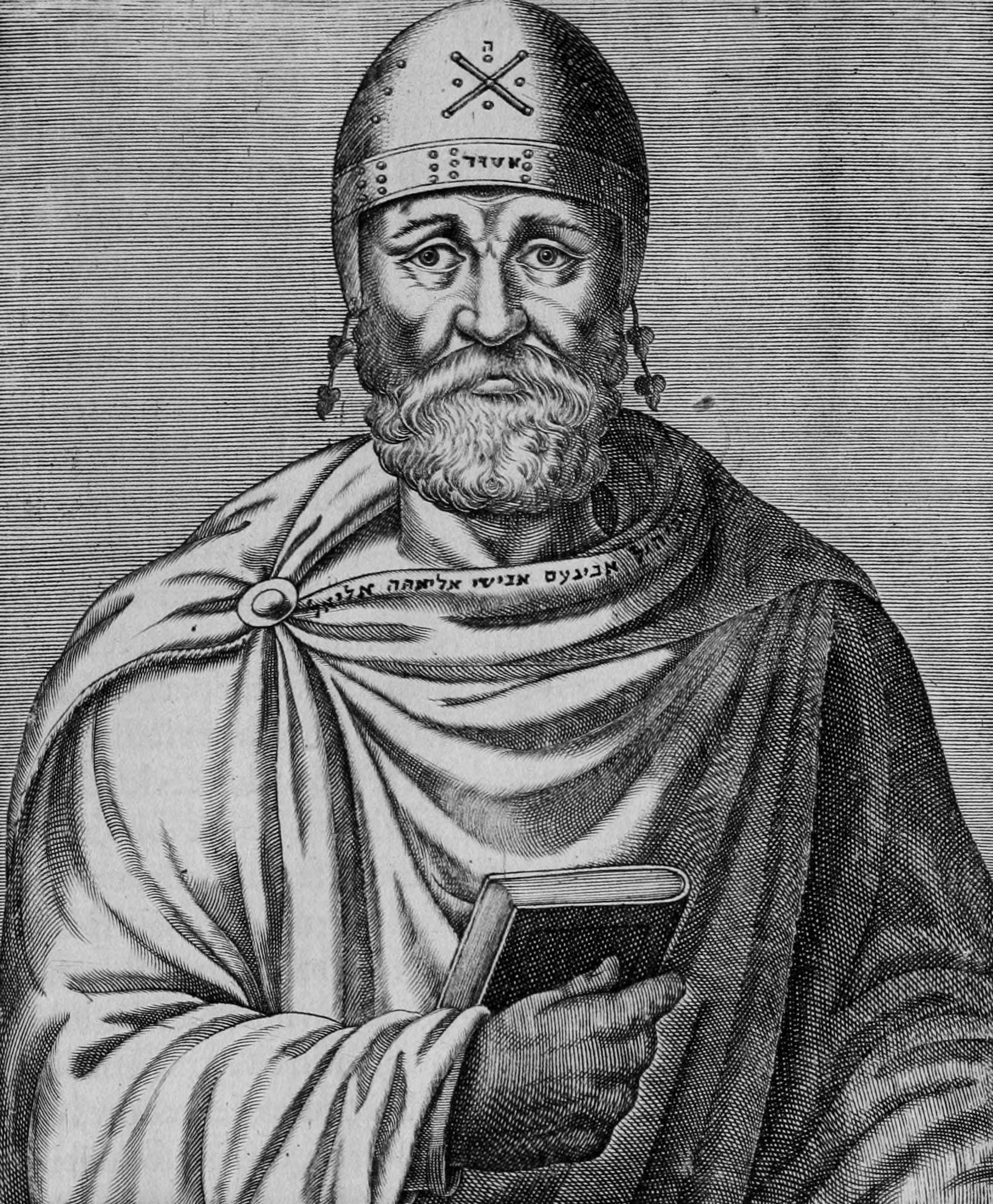
Even before the destruction, then, the Jewish people — while maintaining Jerusalem as its spiritual center — had already developed a parallel life in the wider world. This became fully entrenched after the Roman occupation.
The Talmud that dictated Jewish existence is, of course, the Babylonian Talmud, not the Jerusalem Talmud; Maimonides lived and worked mainly outside the Land of Israel and under the influence of Aristotelian philosophy; the exile and the loss of the Temple transformed the worship of God, from animal sacrifices to a three-times-daily prayers.
This, contrary to Israel’s Declaration of Independence, was a central element in shaping the Jewish people’s “religious character,” in which every synagogue became a “small Temple.” Daily religious life was transformed with the end of the sacrificial service.
Later, a series of ideas was derived from this, designed to preserve religious identity in exile, distinct from life in the Land of Israel. Among these, for example, is the second day of Yom Tov, the reason there are two Passover Seders outside of Israel.
The Declaration of Independence separates the “religious” from the “spiritual,” reflecting the secular outlook of most of its signatories and the largely secular — often anti-religious — character of mainstream Zionist movements. By “spiritual character,” the intention was to refer to the national-cultural dimension, not only the religious one.
But here, too, the Jewish people’s spiritual world was shaped over millennia of exile — in the works of writers like Shalom Aleichem, in the writings of thinkers such as Rabbi Yehudah Halevi, and even in the Zionist movement itself, which drew on European ideas of nationalism and self-determination.
None of this diminishes in the slightest the aspiration of the generations — which never wavered — to return to Eretz Yisrael. But even when most of Judea and the Galilee were under Jewish sovereignty, and the Levites sang in the Temple, many Jews lived in the diaspora. They too believed, “If I forget thee, O Jerusalem, let my right hand fall lame.”
But it was a long-distance love. Jewish identity was not preserved despite the exile. It was, in large measure, created within it. All while preserving the yearning for Zion.
The Two Kinds of Exile
A central principle of classical Zionism is the total rejection of exile — the Galut. The life out of Eretz Yisrael — again, a normal state for most Jews before the Second Temple’s destruction, and a matter of choice — became the source of all evil. In Zionist thought, the diaspora existence is considered a flawed, abnormal, degraded and degrading condition.
“Purging the shame of exile” became a central Zionist goal. David Ben-Gurion, the founding father, devoted much energy to this line of thinking: “The bearers of the Jewish (Zionist, n.e.) revolution in our time said: refusing to submit to fate is not enough; we must take control of our fate… not merely refusing the galut, but abolishing it—uprooting it altogether.”
The reasons were entirely understandable. Theodor Herzl discovered that dreams of emancipation and Jewish integration in Europe were destined to shatter against the rocks of antisemitism. In the end, he came to see that even a patriotic, secular French Jew like Alfred Dreyfus could meet the same fate as an orthodox Jew in the shtetl abused by Cossacks — or a Jew expelled from Rome.
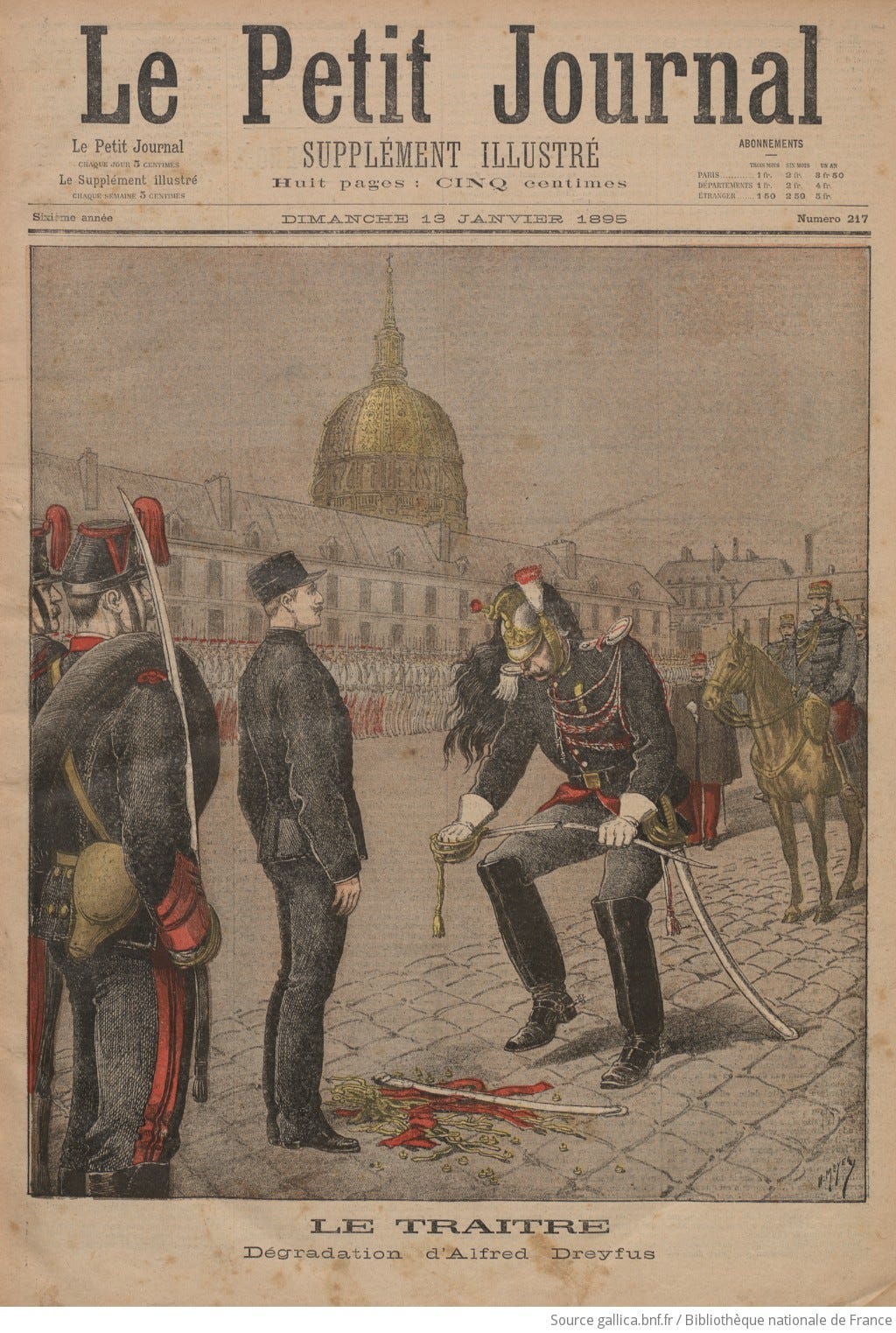
Exile meant humiliation. It was the special tax imposed on Jews in the Roman Empire (used to fund the Temple of Jupiter), or the jizya in the Muslim world; endless persecutions, expulsions and blood libels; restrictions on professions and estrangement from agricultural labor; poverty that born out of oppression.
And even when a new era arrived, and an apparent age of enlightenment, it ended in the Holocaust that nearly annihilated the entire European Jewry. Even before, Zionism felt that the Jewish people were trapped between the control of rabbis and functionaries in the wretched, poor East European towns — rabbis who largely opposed Aliyah to Eretz Yisrael — and antisemites who would not let them flourish unless they abandoned their identity.
The result, many Jewish revolutionaries believed — Zionists, but also socialists and communists — was a people that had adapted itself to life inside a cage built by others, adjusting to it, even internalizing it.
Yitzhak Gruenbaum, one of the founders of the State of Israel and a signatory of the Declaration of Independence, went further. In early 1943, he blamed the “diaspora character” for the catastrophe of European Jewry, saying that Jews had preferred “the life of a beaten dog to an honorable death,” and that he felt a “burning sense of shame” that they waited “in a kind of calm, in a terrible indifference, and no leader arose to rouse them to die in resistance.”
It was a cruel — and totally wrong — judgment. But it reflects the complex, often fraught attitude of Zionist leaders toward the world they themselves came from. Gruenbaum was born in Warsaw, Poland.
Most — but not all — Zionist leaders did not distinguish between two kinds of life outside Eretz Israel: one in which Jews still had political independence and could return at any time to their ancient homeland, to live under a sovereign Jewish political order; and actual exile, after the destruction of the Second Temple, when all Jewish sovereignty vanished.
These were, in fact, two entirely different conditions of diaspora.
The first was a matter of choice. The Jews were already a global people, many of whom lived outside the Land of Israel by decision, not compulsion, while maintaining a deep attachment to Zion — a historical and religious homeland.
The second was exile in the full sense of the word. It shaped much of the Jewish people’s spiritual and historical character, and it was not chosen. It unfolded under constraint, marked by extraordinary religious, economic, and cultural achievements, but also by degradation, persecution, pogroms, and, ultimately, the near-total catastrophe of the Holocaust.
In this second condition, Jews had no option but to exist as a minority. In the first, they elected to do so as free people. This distinction is crucial.
After the reestablishment of a Jewish state in 1948, the Jews effectively returned to the days before the destruction of the Second Temple. To the extent that there is exile, a Galut, it is by choice.
But Zionism continued to treat the diaspora, and life abroad, as if it were still that other exile — by compulsion. Most of Israel’s founders failed to see that the rebirth of Jewish sovereignty also brought about a reimagining of the Jewish global diaspora.
Accordingly, the attitude of Zionism and the State of Israel toward the diaspora has been mostly instrumental. For Israeli public figures, diaspora Jewry continued to be a “challenge.” Israelis have had, and continue to have, two or three set messages when they come to the diaspora.
The first message is to encourage aliyah — immigration to Israel. This is the Ben-Gurion vision. It is often accompanied by a measure of alarmism, which can seem justified these days. Antisemitism, after all, is a chronic disease that has crushed and murdered countless Jews. Those who choose to remain abroad are, in effect, gambling that it will not erupt in their own lifetimes.
The second message is the need to support Israel as the fulfillment of generations of longing — the fullest realization of Jewish life.
The third message follows from the first two: Israel is a success story like no other, and every Jew has a stake in its future.
In Israeli discourse, there is virtually no recognition that Jewish life and culture in the diaspora possess value in their own right — intrinsic, not instrumental.
No Israeli official comes to Jewish communities abroad to truly learn from them. Not really. They come to “explain,” “recruit,” “educate,” or, at best, to “conduct dialogue.” In the Israeli narrative, the diaspora is merely a phase on the way to the redemption of aliyah.
Rather than a conversation between equals, Israeli leaders often behave like the older brother — one who left home long ago and, supposedly, made it — lecturing the younger brother who cannot leave his room and step into the real world. Where there is a state, they insist, one must immigrate to it, fight its enemies, build a high-tech economy, celebrate Purim in bomb shelters as missiles fall, and send one’s children to the army.
This is, of course, a narrow—almost childish—view.
I am a descendant of Zionist pioneers. Most of their families went to America; they chose instead a harder path- building a nation, laying roads with their bare hands, fighting and sacrificing for an extraordinary mission.
Yet it is not difficult to acknowledge both the achievement and the success of my great-grandmother’s siblings who went to the United States and became part of one of the most remarkable success stories of any minority in history.
An Israeli Jew Vs. A Diaspora Jew
An Israeli Jew comes from the majority group in his society, and moves through his country as such. He must fight external threats, but he dictates the story of his country.
A diaspora Jew lives as a minority. And when you live as a minority, if you want to maintain your identity, you need Jewish institutions (not only religious ones), dedicated education, and yes, sometimes you need to act with caution toward the majority group, lest harm befall you.
This is an enormous gap.
It was diaspora Jews — Ashkenazi and Mizrahi — who founded Israel. They brought with them the accumulated experience of an ancient minority: their wisdom, their skill in behind-the-scenes diplomacy, and a deeply global perspective. All of this they carried into the young State of Israel. Israel was founded by Galut Jews, even as they sought to create a “new Jew”— the Sabra.
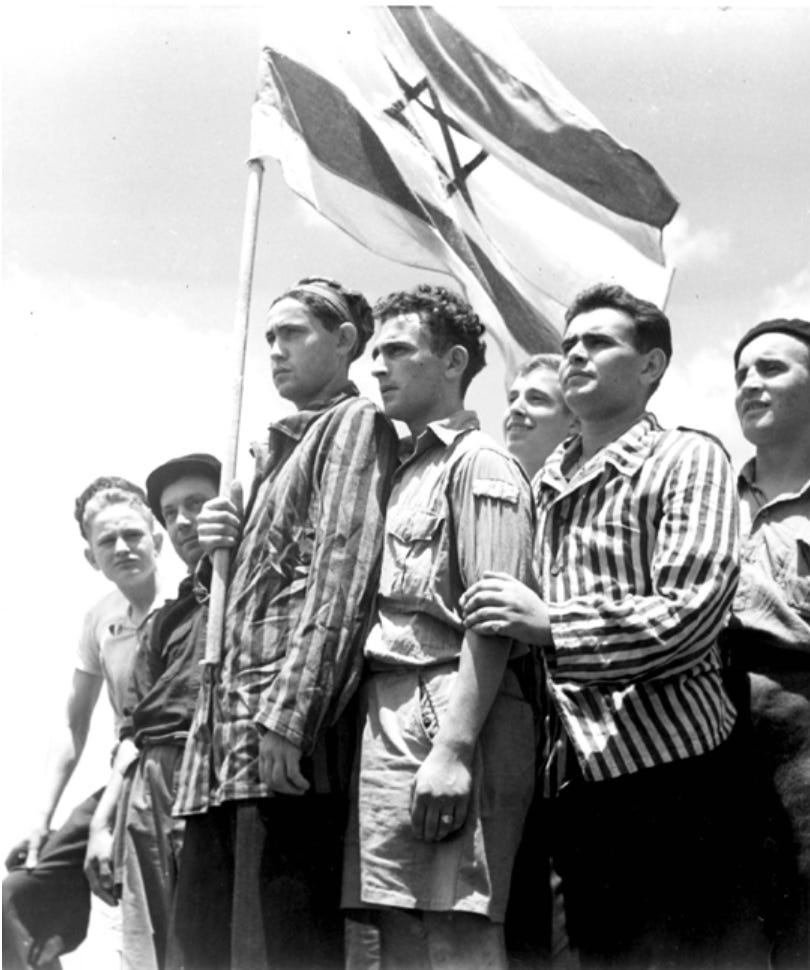
But then they died. And their children — and then their grandchildren and great-grandchildren — began to forget. Within the Zionist narrative, there is no structual recognition of the intrinsic value of the diaspora experience in shaping the Jewish people; nothing to preserve this collective memory or its lessons.
“What we can learn from Jewish life in exile” usually begins and ends, for many Israelis, with the Holocaust and the need to make aliyah. This is a grave mistake.
Education, Alliances, and Persuasion
Life as a minority across the world required Jews to preserve their identity. But it also demanded adaptability, the ability to navigate between cultures, and the building of global networks of trade, knowledge, and relationships. Those became a source of strength in the ancient world, the Middle Ages, and the modern era.
Jews developed a sensitivity to political danger; they understood that they would be the first to pay the price for sweeping social upheavals — coups, revolutions, and extremism. Prime Minister Netanyahu has claimed more than once that Jews were not endowed with a strong instinct for recognizing danger, citing the Holocaust as evidence. I would argue the opposite: the most persecuted minority in the West could not have survived without an acute sensitivity to peril.
As a minority — never able to wield power, anywhere — they developed a worldview that rejected force and outward displays of power, a tendency already rooted in early Judaism’s rejection of idols. The veneration of power was replaced by a commitment to learning and education, seen as the true beginning of redemption — first in a religious sense, and later in secular and class terms.
Jews gravitated toward classical liberal values not by accident, but because they experienced the other side of the equation: entrenched traditionalism that masked prejudice, discrimination, and hatred. They built alliances with other minorities and with centers of power, and learned to speak effectively to public opinion — because it was the right thing to do, but also because doing so carried real survival value.
Cold realism, the ability to mobilize public opinion, political advocacy, and a focus on the next generation— all were essential to the flourishing of diaspora Jewry.
Most importantly, life as a minority cultivated a moral sensitivity — to the vulnerable, to injustice, and to the layered, complex nature of identity.
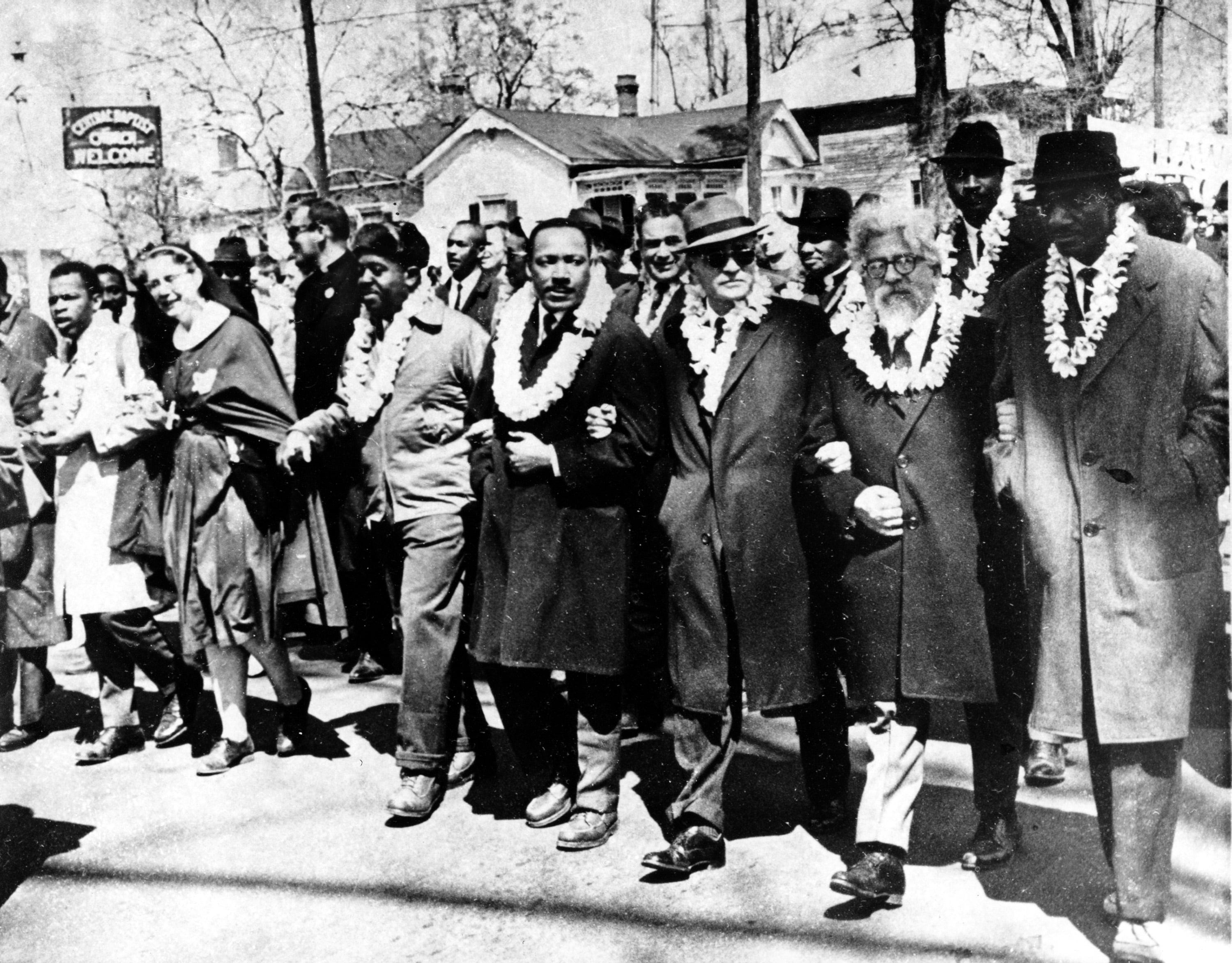
Much of this has lost its hold on Israeli governance. Consider what was outlined in the preceding paragraphs: political realism, a reverence for education, sensitivity to the possibility of a pogrom, the need to build alliances and engage public opinion, and a moral awareness of one’s place in the wider world. These are precisely the qualities diaspora Jews have had to cultivate — and which are absent in much of today’s Israeli establishment.
Many Jews in the diaspora see a Palestinian family whose flock is being looted, whose door is being battered, whose sons are beaten by far-right settlers, and they see more than a moral injustice. Even unconsciously, as a minority, they sense an echo of a nightmare that could happen to them — “Hilltop Youth” cast, in their memory, in the role once played by Cossacks.
The generation of my parents, and their parents, did not see much to learn from diaspora Jews even if they acknowledged the diaspora experience — partly because for some of them, these values were self-evident. Yet for many others, their parents and grandparents — with their “galuti” (exilic) ways — were a source of embarrassment, so far removed from the myth of the new Sabra.
Today, the discourse in Israel has changed completely. People celebrate their heritage, travel with their grandparents to Poland or Morocco, and reclaim the memory and identity of their families in the diaspora. It is a welcome — and much needed — shift.
Yet it has not been accompanied by a systematic rethinking at the core of the Israeli narrative — an effort to say: this is what we learned and crystallized over two thousand years of exile, and this is what we must carry forward. The nostalgia is mostly for folklore — customs, food, liturgical poetry (Piyutim), stories. That is not enough.
The Merits of the Diaspora
While Jews in America think of Israel as an insurance policy, more and more Israelis think the same of their foreign passports. Like that famous sketch from the Israeli TV show “Eretz Nehederet” about the meeting at Ben-Gurion Airport — between those returning to Israel because of antisemitism and those leaving it because of the war and an extreme government — these phenomena are happening in parallel.
Even beyond the language of insurance and future catastrophe, life in the diaspora is not a disgrace. It requires no atonement. It carries deep value for Jewish identity as a whole. The growth of Israeli communities abroad is an undeniable reality, and the hope should be that these communities draw on the Jewish experience of millennia —one that endured and flourished, despite everything.
And as long as life as a minority abroad remains a choice — rather than the result of tragedy in Eretz Israel — this is not the same Galut of two thousand years.
Israeli Jews who come to the diaspora will need to adopt the quality we Israelis often tend to forget: humility. Yes, the Israel we hail from represents a rebirth, one successful beyond compare to any national project in recent history. It is not only about past success, but about resilience — and the creation of a democratic culture that blends tradition with a relentless drive for the cutting edge, a dynamism like no other.
But diaspora Jews represent the ability to survive and flourish over thousands of years, sometimes in difficult conditions, and above all with a remarkable preservation of their identity. They have successfully created communities with thriving institutions based on self-generated investment.
The call to recognize the deep and independent value of Jewish life in the diaspora is not a rejection or dilution of the Jewish right to Eretz Yisrael. It is simply a correction of an error — one that Israelis cannot afford to make.
If there is one lesson the Galut should have taught all us Jews, it is to be fair, tolerant, even kind to minorities, to treat the stranger as we ourselves would like to be treated. As Nadav says, the Hilltop Youth are a disgrace to all of us Jews and it is shameful they have not been closed down.
This essay does something important. It corrects the story. But the deeper issue is not narrative. It is structure.
What it reveals, without fully naming, is a system out of balance.
Israel holds state power. The diaspora holds relational and moral power. One operates through sovereignty. The other through legitimacy, networks, and influence. The system depends on both, but treats one as central and the other as secondary.
That worked when the goal was statehood. It breaks down in a world of distributed identity.
Since October 7, the emotional bond has intensified. But the structural gap remains. Crisis creates solidarity, not equality.
So the real question is not whether the diaspora has value. It clearly does.
The question is whether the system can evolve from a single center model to a shared one.
Until structure catches up with reality, tension is not a failure. It is the signal.