

What the Mossad Has to Say for Itself on Iran
Inside Israel’s establishment, an argument is unfolding over whether Mossad oversold regime change— or whether its plans were never fully allowed to unfold

As the world waits to see how the U.S. blockade of the Strait of Hormuz will shape the stalled negotiations between Washington and Tehran, public opinion is already beginning to harden around the war. A growing wave of reporting is revisiting the early expectations — in both Israel and the United States — that the conflict might trigger the collapse of the Iranian regime.
Within Israel’s defense establishment, officials are deeply concerned about a narrative that is gaining traction in the United States. The narrative is simple: that Israel — and more specifically Benjamin Netanyahu and the Mossad — sold the White House on a regime change plan in Iran, and then they didn’t deliver. Much of the U.S. discourse now blames Israel for dragging America into the war, and it remains unclear how Israel will contend with that accusation over the long term. From the first day of the conflict, it was evident that Israel was taking a gamble with its standing among the American public — a risk I have written and spoken about during those early days.
The assessments and plans of the Israelis, in this telling, were nothing more than wishful thinking, or even deliberate deception. Much of this perception is closely tied to the exclusive, detail-laden story published by Maggie Haberman and Jonathan Swan about Netanyahu’s pitch to Trump at the White House.
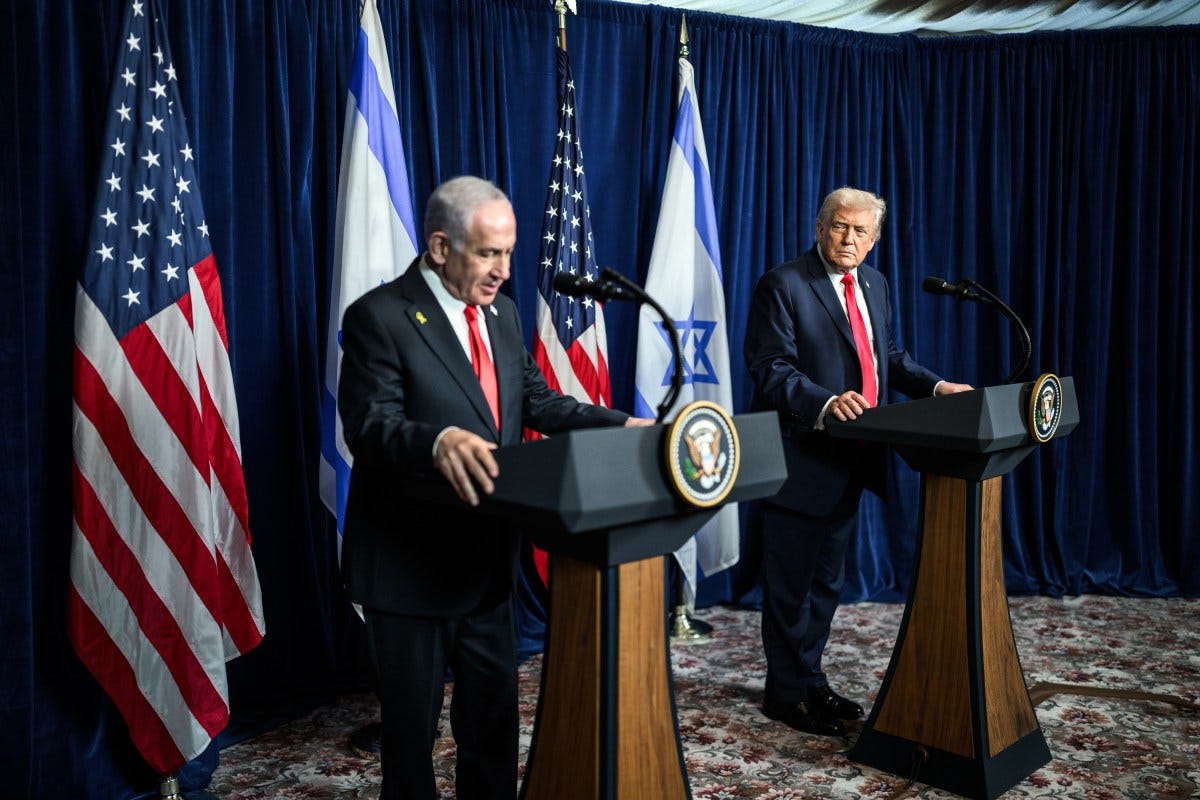
Over recent weeks I spoke with senior figures in the defense establishment to discuss the events leading to the war. Beyond the concern expressed, what I heard was an overarching perception among Israeli security leadership about what happened — and what didn’t — in Iran.
Several points were raised. They constitute an effort by these sources to present a defense of the Mossad.
The Mossad’s plan included several phases, the vast majority of which were never authorized by Jerusalem and Washington. The elements the Mossad did implement — for instance, the targeting of Basij roadblocks across the country, and specifically in Tehran — were in fact successful. (According to reports, Israel deployed hundreds of assets to identify Basij positions before striking them. The Basij is the Islamic Republic’s main militia force used to suppress dissent).
The plan included, as was widely reported in the New York Times, a massive deployment of Kurdish forces in a broad invasion of Iran. This was thwarted by Turkey, which successfully used its influence to prevent the plan from being activated. Had such an invasion taken place, the Islamic Republic would have faced a severe crisis — forced to divert resources to suppress both an internal uprising and an armed incursion.
Even the opening of the war did not unfold as Israel’s defense establishment had proposed. While the assassination of the Supreme Leader and other officials was indeed authorized, other elements were not. They wanted more “shock and awe.” For example, Israel believed that in the opening salvo of the operation, all electricity in Tehran should have been knocked out — except for hospitals — leaving the city in darkness immediately at the start of the war. That proposal was not accepted.
A series of other operations were supposed to take place only after the bombing phase, and to date have not been given the green light (see also here). To declare the effort a failure before it was implemented — or when only parts of it were — is an unfair verdict against a Mossad that demonstrated impressive successes during the war.
In short, my sources say that while the reporting about the White House presentation and talk of possible regime change is mostly accurate, no commitment was ever made by Israel as to regime change, and crucially, the tactical details of the operations Israel proposed (and which were not carried out) were never disclosed. In practical terms, they are saying: if we had been given the full authorization we sought and still failed, the responsibility would be ours. But the full plan was never approved — only portions of it.
All of this should be taken with a grain of salt — and maybe two. The initial reporting did indicate that, immediately after the Israelis presented their regime-change blueprint, American officials — first and foremost Secretary of State Marco Rubio — dismissed it as “bullshit.” A senior Israeli official who was deeply involved in the discussions before and during the war told me he himself does not accept the defense establishment’s and Mossad’s framing.
In his words:
“The problem is not that the orders to execute the plans were withheld. The problem is that the Mossad said things were going to happen that did not happen. They promised and didn’t deliver.”
These are sharp words — and they come from an Israeli source. Adding to this is the fact that AMAN, Israel’s military intelligence, was far more doubtful about regime change than Mossad to begin with.
The enormous investment of resources aimed at creating the conditions for an Iranian revolution is a relatively new phenomenon in Mossad history — and largely the product of a strategic choice made by the current Mossad chief, David Barnea, who is nearing the end of his tenure.

Barnea has long been considered close to Netanyahu, but by most assessments, there has been a noticeable distancing of late.
Deal or No Deal
The government’s outlook on an upcoming Iran deal falls into two opposing camps.
One group says there must be no deal with Iran. After all, an agreement will lead to the unfreezing of vast Iranian funds, the lifting of sanctions, and the release of pressure on the Islamic Republic. If that happens, then the war, which was meant to neutralize the Iranian threat, will only strengthen it — and especially the Revolutionary Guards.
The regime, this group holds, must be strangled until it capitulates or changes. Parts of the defense establishment, and especially the Mossad, support this position; they view the deal currently taking shape as a dangerous development.
The second group is calmer and concerned with the politics of the situation. They argue that this war is, first and foremost, about the issue of Iran’s nuclear program. If the enriched uranium leaves Iran and enrichment is halted for an extended period — the U.S. demands 20 years, Iran has agreed to 5; call it somewhere in between — that is a victory.
And what about the missile program, support for Hezbollah and the other proxies? Well, say those who support this pragmatic approach, you take what you can get while you have the chance.
Of course, it may be that none of this matters. Both camps, with all due respect to them, are waiting for President Trump’s decision. He will determine, navigate, and ultimately decide.
This basic truth seems lost on some in the defense apparatus. Israel recommended continuing the war during the US’s negotiations with Iran; that recommendation was rejected. The IDF wanted to begin taking down energy infrastructure, one facility at a time; and received a flat no.
I had several conversations in recent weeks with senior defense establishment figures; they spoke aggressively, without hedging and restraint. One explained that Iran’s entire energy sector should be destroyed immediately — come what may in the Iranian response on Gulf oil and gas facilities.
“They’re in love with kinetics, with strikes,” one government official in Israel told me. “They’re on a high. It’s the first time they’ve gone to war alongside America, and they’re trying to outflank this Israeli government from the right — just imagine, to outflank this government!”.
Another government source told me, “Thank God the Trump administration restrained Israel in Lebanon, because we do not believe the IDF had a viable plan that would have worked there.”
This is a notably different — and more nuanced — tone from Israeli officials. Beyond the obvious blame game, the deeper question is whether it signals the emergence of a new way of thinking. That remains to be seen.
Defeat is an orphan. There is so much spin that even with the excellent reporting I am pretty sure we are only getting a small understanding of the true situation
Regine change can't fail. It can only not have been tried.
I remember a similar argument about communism and the Soviet Union.