

The War of Hormuz?
Exclusive: Israeli official says Washington has warned Jerusalem to prepare for a longer campaign as the U.S. moves to reopen the Strait of Hormuz

In satellite images of the tiny Iranian oil island of Kharg, you can see the silhouettes of tankers lined up offshore.
The war continues. The Americans have bombed military targets on Kharg. In Israel, sirens wail — again and again. In Iran, continuous airstrikes. including this morning.
Yet on Kharg Island, Iran’s main oil export terminal, giant tankers are still being loaded.


I write “as usual,” but that is not quite right. A few days ago, The Wall Street Journal estimated that Iran is now selling more oil than it did before the war — and, of course, at a higher price.
If the U.S. prevents all Iranian oil exports, prices will rise even further, and the disruption to global markets will grow. Its clear from remarks made by U.S. officials after the targeted strikes against Kharg Island, that Washington is trying to draw a distinction between the oil industry and the war — again attempting to calm markets and ease panic among Gulf countries. They are worried that the Iranians might bomb the entire regional oil infrastructure.
The problem is that Iran seems to be pursuing the opposite strategy: turning oil into a lever of the war while stopping short of a full-scale shutdown — a position that is, strategically, extremely comfortable for the regime.
Iran has not actually closed the Strait of Hormuz, as is sometimes reported. Instead, it has closed the strait to its enemies. Meanwhile, it continues to use its “ghost fleet” to ship oil to China — and not only to China. Anyone who wants permission to release their stranded tankers calls Tehran. That is what the Indian government has done, for example.
What was an open passage has turned into a managed corridor. By effectively controlling the strait, Iran is attempting to coerce the United States.
“This is an intolerable situation,” an Israeli official told me. “Our understanding is that the United States will not allow it… Hormuz will be opened at any cost, by force if necessary.”
“America is telling us to prepare for weeks more of fighting because of Hormuz. Hormuz is the story. They [The U.S.] have not abandoned the other objectives in Iran, but a problem has emerged here that cannot be ignored.”
Let’s note the obvious: in Israel there is sometimes a tendency to exaggerate the other side’s belligerent intentions. By “at any cost”, my guess is that the United States is not considering only force, but will use it if necessary.
A Strategic Principle Put into Practice
Iran is now implementing, in practice, one of its core national-security doctrines: using the Strait of Hormuz to pressure the global economy and position itself as the region’s hegemon. With almost one-fifth of the world’s oil effectively blocked, that’s a great deal of leverage to play with.
Iran’s foreign minister said yesterday that a number of countries have approached Tehran seeking safe passage for their vessels through the Strait of Hormuz. This is his way of gloating.
The United States has now opened its Strategic Petroleum Reserve, and Saudi Arabia is moving vast quantities of oil through the east-to-west pipeline it built across the Saudi desert. There is a growing backlog of tankers trying to enter the Red Sea, hoping to load oil at the Saudi terminal instead of in the Persian Gulf.
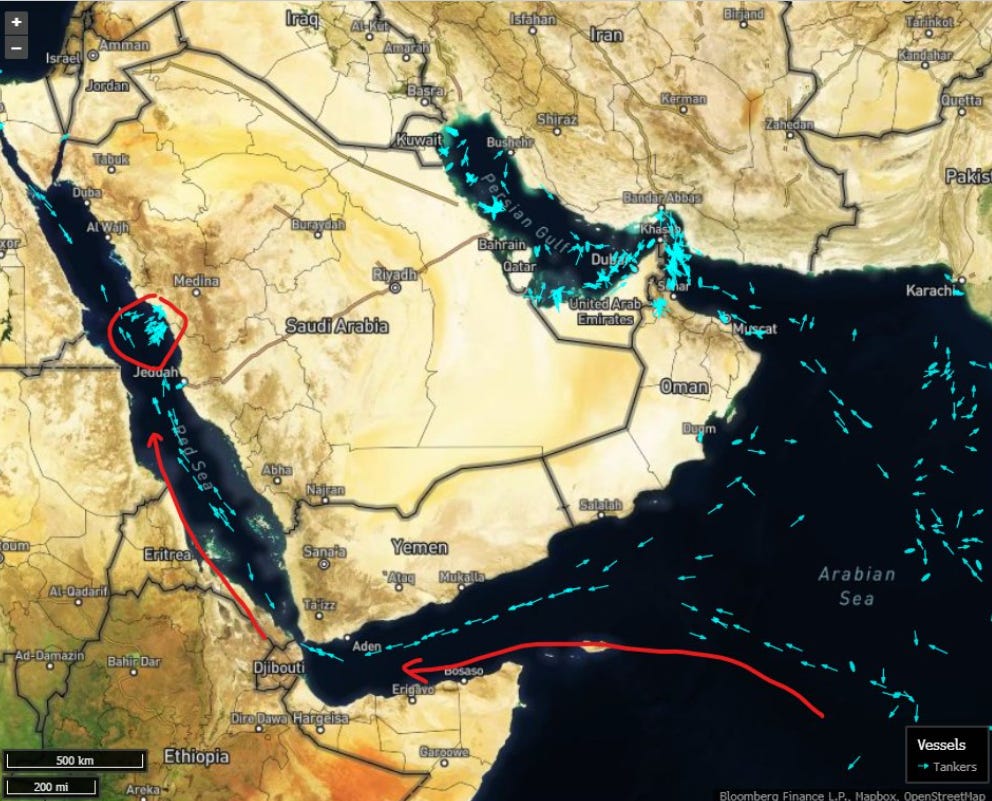
But even taken together (there is also a UAE export terminal that bypasses the Strait) energy experts say these alternatives can account for only 40–50 percent of what normally exits the Gulf. The rest is effectively blocked.
Another Israeli official told me that Iran has closed the strait by deploying 12 large naval mines, creating a shipping lane that it controls.
No Simple Solutions
Obviously, the best option for the United States would be for Iran to cave- in to U.S. pressure and allow free or freer passage through the strait, climbing down the tree out of fear of what Washington might do. For now that does not appear to be the case, and most Iran analysts believe it is unlikely to happen soon.
In Israel, some propose simple solutions.
One is to bomb Iran’s oil facilities — especially Kharg — and cut off the lifeline of the regime. The problem with this approach is that the Iranians would almost certainly respond by blowing up oil infrastructure across the entire Gulf — or trying to. Thus, an attempt to reopen 20 percent of the world’s fossil-fuel supply could end up damaging that supply for years.
The market is extremely sensitive to a catastrophe of this kind. When Israel bombed military oil depots — not refineries — in Iran, even Senator Lindsey Graham, probably Israel’s best friend in Washington besides the President himself, tweeted a warning to Israel: “Please be cautious about what targets you select. Our goal is to liberate the Iranian people in a fashion that does not cripple their chance to start a new and better life when this regime collapses. The oil economy of Iran will be essential to that endeavor. ”
The main proposal is to seize control of the Strait of Hormuz and escort the tankers through it. This would probably involve naval, air and ground operations.
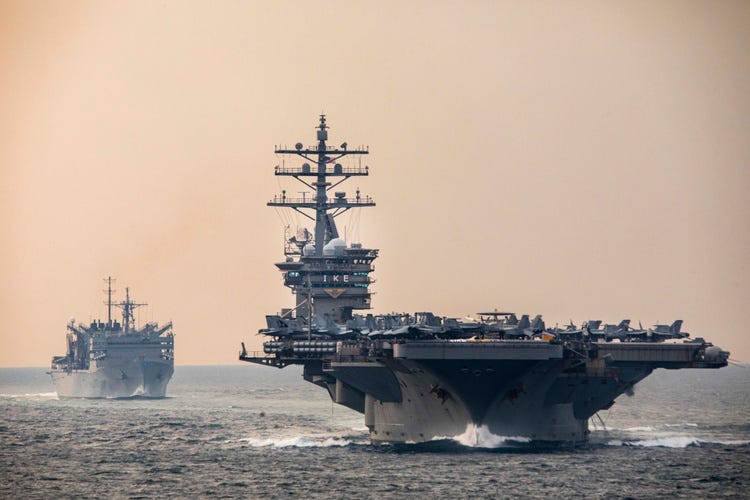
From a military standpoint, this is a feasible option- but far from a simple one. The United States could do it — and has already deployed 2,500 Marines to the region. Indeed, the U.S. is working to enlist other countries in reopening the Strait, with President Trump mentioning the NATO alliance. Countries do not appear to be lining up to join this mission, at least for now.
The risk is that Iran would respond by targeting oil infrastructure across the region. The Islamic Republic has spent decades preparing for precisely this moment. It has built a layered system of disruption — from explosive speedboats to drones and mines —designed for a confrontation in Hormuz.
The Tanker War of the 1980s, led by the United States, took a long time to resolve. It ended with the destruction of the Iranian navy on orders from President Ronald Reagan. Tehran learned from that defeat. It no longer relies only on a conventional navy.
Two Possible Scenarios
Two scenarios emerge.
The first, as many in Washington are now advocating, is a “declare victory and go home” approach. This approach carries a price. If the war ends quickly — and it becomes clear that Tehran can open and close the Strait of Hormuz at will, even during a conflict with the United States — Iran will have effectively established itself as the region’s hegemon.
This form of economic coercion could then be applied, in more limited ways, for years to come.
The Gulf states, and especially Saudi Arabia, would be forced to acknowledge a bitter new reality: an Iran increasingly controlled by the Revolutionary Guard, less by the clerical establishment, holding the valve that regulates their economies. They are deeply afraid of this possibility. The fear is well founded.
In the second scenario, the United States attempts to force the Strait of Hormuz open. This risks both lengthening and widening the conflict, with a longer time commitment to the operation, and Iranian attacks on oil infrastructure across the Gulf.
One idea mentioned in this context in the U.S. media is the possibility of the United States taking physical control of Kharg Island itself. But even here the questions are obvious: what would be the cost, and how effective would it really be? Iran could try to bombard the island, including with cheap drones, or retaliate by striking oil installations in other Gulf countries.
Neither scenario is optimal. Both carry risks.
Indeed, a central challenge is now to avoid both of these scenarios — and to find a third way to resolve the Hormuz crisis.
What Comes Next
None of this should obscure two facts. First, that the damage inflicted on the Islamic Republic is already severe and American determination remains impressive. Iran’s ability to escalate and drag the region into wider destruction is rapidly eroding according to most analysts. Its remaining leverage lies in Hormuz. On the battlefield, however, it is still losing.
Beyond the current kinetic phase, plans aimed at weakening the regime still exist — and have not yet been fully implemented. For now, the Islamic Republic’s command and control still appears to be functioning, and the regime, Israeli officials say, is holding.
But the United States and Israel still have a few interesting initiatives for the war in reserve.
Before any of that unfolds, though, Washington will have to confront and resolve the question of the Strait of Hormuz. Deciding that a closed Strait is simply the price of war might hand the Iranians a historic precedent in the Gulf.
It seems to me that every pundit and his dog this week has suddenly become a middle east expert. A common theme is that, of course, Iran was always going to block the Strait of Hormuz.
However what I haven't seen a clear answer on is why, if that was so obvious, hasn't been more to be done to secure the strait over the last fifty years? Appreciate all learned thoughts. Has there been infrastructure installed that was quickly disabled or is it just not there? Cheers.
Http://preceperi.substack.com
My best guess is Trump will do whatever is needed to take back effective control of the strait of Hormuz. We are under estimating his determination to win this fight against Iran. He has the stomach to continue this fight and the incentives to take back control of the strait point in favor of achieving this goal. His legacy is at stake and he knows this is the right thing to do. For all the talk about his impulsiveness and lack of moral compass, he has been remarkably consistent over the years about his position against Iran’s regime.