

The Lebanon Trap
Israel can hurt Hezbollah. It still has no credible path to dismantling it — and Washington is increasingly setting the limits of the campaign

Dr. Uri Yosef Sylvester was killed when a Hezbollah fiber-optic drone struck his armored vehicle near the Beaufort Castle area, a position recently seized by the IDF as part of the increasingly complicated war in Lebanon. Captain Sylvester was the battalion physician of an infantry brigade, serving there as a reservist. He was 30 years old.
His birthday was in October, and he wrote a Facebook post:
“I hope that after an unprecedented war, we will break the cycle of wars in Israel and enter a period of peace and prosperity with no expiration date.”
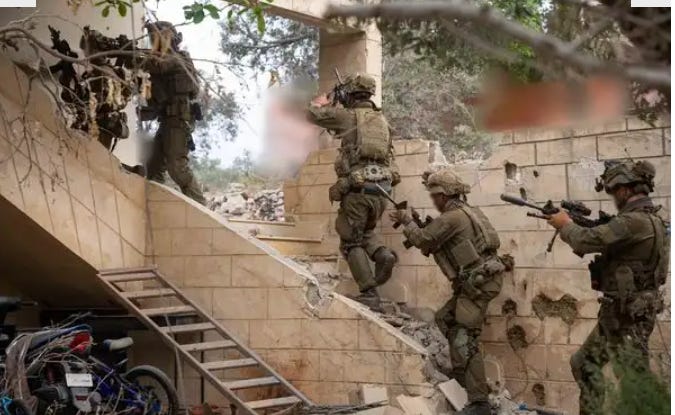
Over the past ten days, six IDF soldiers have been killed in similar incidents and dozens wounded—most of them because of Hezbollah’s use of fiber-optic drones, for which the IDF and Israel’s security establishment currently have no effective answer.
For many Israelis, the past few weeks have been an unsettling reminder of the years spent in Israel’s security zone in southern Lebanon. Back then (1986 onwards), Israeli soldiers manned remote outposts and waged a prolonged guerrilla war against Hezbollah and the Shiite militia Amal, until Israel withdrew from Lebanon in 2000.
“It’s like watching the same movie all over again, only this time with drones,” one reserve officer told me.
To understand the effectiveness of these drones, take a look at this footage from the war in Ukraine:
The IDF says Hezbollah is suffering severe damage and heavy blows in southern Lebanon. Yet the current casualty rate among Israeli troops, and the sense of vulnerability among soldiers, cannot be denied.
The day before yesterday, Prime Minister Netanyahu decided to escalate the war in Lebanon and attempt to strike Hezbollah strongholds in Beirut. Special instructions had already been issued to residents of northern Israel, who have endured rocket attacks and drone infiltrations. Off-the-record briefings were also given to military correspondents. The idea was to strike in Beirut because Israel believes this remains Hezbollah’s soft spot — the place where pressure from Lebanese society can be brought to bear on the organization.
This is neither a new nor particularly original idea. But the government wants to demonstrate that it is trying to do something.
The Israeli Air Force was reportedly already on its way to conduct operations when President Trump called Prime Minister Netanyahu. Following that first conversation, the planned strikes were cancelled. A second call was more contentious. It took place after Netanyahu again warned that the IDF could strike Beirut. According to Axios, Trump told Netanyahu “You’re fucking crazy. Without me, you’d be in jail. I’m saving your ass. Everybody hates you now. Everybody hates Israel because of what’s happening.”
A presidential statement followed, outlining an arrangement under which Israel would refrain from attacking Beirut and Hezbollah would refrain from attacks inside Israel. The leader of the Israeli opposition, Yair Lapid, wrote in response: “vassal state, fully pledged”.
Israel’s strategy in Lebanon — assuming one exists — is in deep crisis. Here are the reasons, briefly:
1. Hezbollah chose to break the ceasefire and join the war in March 2026, acting as a tool of Tehran in its broader confrontation with the United States and Israel. This decision did not surprise Israeli intelligence, which had assessed that, despite the organization’s weak state, this was likely to happen. But while fighting a broad war against Iran, the IDF could not operate in Lebanon with the same level of intensity.
2. When the intensive phase of the bombing campaign against Iran ended, following an American decision to pursue negotiations, Israel believed it would be able to turn its attention to Lebanon without major constraints. But Iran, determined to preserve its hegemony in Lebanon, made protection of its Lebanese militia —Hezbollah — a condition of any diplomatic arrangement. From the first moment, the IDF remained constrained.
3. Israel does not have a coherent strategy for solving the Hezbollah problem in Lebanon. To disarm Hezbollah, one of two things would have to happen: either a forced disarmament campaign, which could realistically occur only after occupying all of Lebanon — a step Israel cannot and does not want to take — or sustained pressure from Lebanese society and the Lebanese Armed Forces to disarm Hezbollah themselves, something they either do not want to do or are incapable of doing.
Israeli ministers continue to promise that Hezbollah will be disarmed without explaining how exactly that is supposed to happen.
The Prime Minister and the Defense Minister issued triumphant statements about the capture of Beaufort outpost, historically associated with Hezbollah. But the site has not served as an important Hezbollah base. It was captured without a battle.
Most sources assess that the current conflict in Lebanon will ultimately be resolved through some form of political arrangement. At present, no one in Israel’s security establishment has a credible plan for how Hezbollah could actually be disarmed. The organization can undoubtedly be dealt significant and painful blows, improving Israel’s position and shaping a more favorable outcome. That, however, is very different from achieving the goal of disarming Hezbollah.
4. Tactical changes with strategic implications. Hezbollah’s deployment of fiber-optic drones in Lebanon is a tactical move with strategic consequences. The IDF currently has no answer to it. Casualties are mounting, and the current territorial posture is not significant enough to prevent these attacks.
5. Iran has insisted — and appears to be succeeding — in linking negotiations over its own future with developments in Lebanon, much to Israel’s frustration.
Senior figures in Israel’s security establishment say that despite all the slogans, the IDF is operating in Lebanon with a relatively limited force structure. Unlike the 2024 campaign — with its surprise blows, exploding pagers, and operational creativity —there is, in this case, insufficient forward thinking.
Even the discussion of bombing Beirut’s Dahiya district, long associated with Hezbollah, is viewed by some senior officials as anachronistic. Hezbollah has already moved much of its infrastructure elsewhere.
Their assessment is that the challenge of disarming Hezbollah will not be solved through the current military campaign alone. It requires a broader strategy — one that finds ways to activate regional levers (Syria, for example), influence Lebanese society, and combine those efforts with continued military pressure from the IDF. Such a strategy would take a long time.
But the most important point is political.
Israel is heading toward elections within a matter of months. Answers along the lines of “this will take a long time” or “a comprehensive strategy is required” are not answers that serve the government.
Which is why this increasingly looks like a waiting period — for the possibility of an agreement with Iran that could also bring the war in Lebanon to an end.
It’s the Iran trap - Lebanon is merely a byproduct. Cut the head off the snake and the body dies.
Hezbollah has called for the overthrow of the Democratic Elected government of Lebanon… Lebanese people don’t want them and they’re sick of dying and having their lives destroyed to further Iranian policy