

The Blockade Is Now in Effect — and the War Enters a New Phase
A new Israeli poll shows mounting doubt — fewer than a third believe the regime was significantly harmed, most expect a return to war;Netanyahu is increasingly concerned by the public reaction

1. A New Phase of the War
Like you, I have spent the week reading many summaries of a war that is not over. Yet sources across the region warned that the two-week ceasefire was not what it seemed; in their view, the United States has no intention of scaling back its core demands - particularly on the nuclear issue and, above all, the reopening of Hormuz.
As of 10:00 a.m. Eastern time, the United States is imposing a naval blockade on the Islamic Republic of Iran, following the widely anticipated collapse of the Pakistan-mediated talks.
As both Israeli officials predicted, Iran’s sense of momentum, even victory, left little room for maneuver or compromise in the ceasefire negotiations.
The blockade marks the opening of a new phase in the war. It is no longer defined primarily by airstrikes inside Iran or by Tehran’s projection of force across the region— ballistic missiles striking Israel and Gulf countries — but by a theater that has, in many ways, been central all along: Hormuz, and with it, the global energy market.
It is tempting to make a final call on this war, as we are in what looks like the end of the kinetic phase. But it is impossible to measure the results of the war now, before it is clear what agreement — if any — will actually be reached with Iran. The scope of the damage inflicted on Iran has yet to be fully revealed, though it is clearly substantial, and its consequences will unfold over time, rather than all at once.
2. The Meaning of the Blockade
Since President Trump has repeatedly argued that Iran has been virtually beaten on the battlefield in his view, its control over the Strait of Hormuz has become a central obstacle to America’s ability to end the war on its own terms. The strait is not closed, of course; the Iranians control it, monitoring the flow of tankers at their discretion — which is much worse than closure.
That has now changed with the imposition of the blockade. Paradoxically, Iran’s oil revenues have risen during the conflict, largely because the scarcity it created in the Strait drove prices higher. If the blockade holds, that’s over for now.
Two main options were debated for how to force Iran to reopen the Strait:
*Striking energy facilities and oil fields
*Seizing territorial control of strategic installations, such as Kharg Island
The administration ultimately chose a third path - a naval blockade.
This approach avoids the direct use of kinetic force. As a result, it may limit Iran’s ability to finance its war and army, but it does not inflict lasting structural damage on Iran’s oil economy.
Instead, it establishes a defensible principle that might create an international coalition of sorts: if Iran prevents others from exporting oil, it should not be able to do so either. In effect, it seeks economic pressure without a bombing campaign.
The possible downside lies in market reaction — particularly oil prices, which have risen in the past 24 hours. Tehran may once again play for time, calculating that rising global pressure on the Trump administration will eventually force it to back down. Yet some of the pressure now also shifts to Asia — above all to China, a main buyer of Iranian oil.
Return to war remains a highly probable option. A blockade is, by definition, an act of war—and it can escalate rapidly if Iran fires on U.S. naval forces, for instance.
3. How to Measure Success or Failure
The desired end result for the United States, according to the president’s own statements, is an agreement — and some outcomes are more plausible than others. Iran may agree to halt uranium enrichment — with enforceable commitments — and remove its highly enriched stockpiles; both would constitute real achievements.
By contrast, few expect meaningful limits on its ballistic missile program — ones that could be monitored and enforced efficiently.
If none of these issues are truly addressed — and if Iran gains any recognition of the legitimacy of its illegal control over Hormuz — then this war can hardly be considered a success.
An agreement that fails to address enrichment, uranium stockpiles, proxies, or missiles would, from Tehran’s perspective, grant it effective freedom of action in every domain left untouched. It’s that simple.
4. Israelis are Disappointed
A new survey, conducted in the narrow window between the ceasefire with Iran and the announcement of a blockade, captures a striking shift in Israeli public sentiment: a growing sense that the war has fallen short of its aims.
The most remarkable aspect of this poll is the contrast between how the Israeli public feels now and how it felt after the 12-day war. That war, according to the same think tank and pollster, using the same methods, was seen by Israelis as extremely successful.
The poll was conducted by the Institute for National Security Studies (INSS).
Only 31 percent of Israelis now believe the ayatollahs’ regime was significantly weakened. At the outset of the conflict, nearly 70 percent expected such an outcome. The same pattern holds across key military objectives. Just 30 percent think Iran’s nuclear program was meaningfully damaged (down from 62.5 percent at the start), and 42 percent believe its ballistic missile capabilities took a serious hit (compared to 73 percent initially).*
Sixty-one percent of Israelis oppose the ceasefire, while only 29 percent support it. Confidence in the war’s achievements is limited: satisfaction with military gains stands at 37 percent, and with diplomatic outcomes at just 23 percent.
The public appears deeply skeptical of the current trajectory. Seventy-three percent believe Israel will need to resume fighting Iran within a year.
One constant remains: trust in the Israel Defense Forces is high, at 78 percent. Trust in the government, by contrast, stands at just 30 percent.
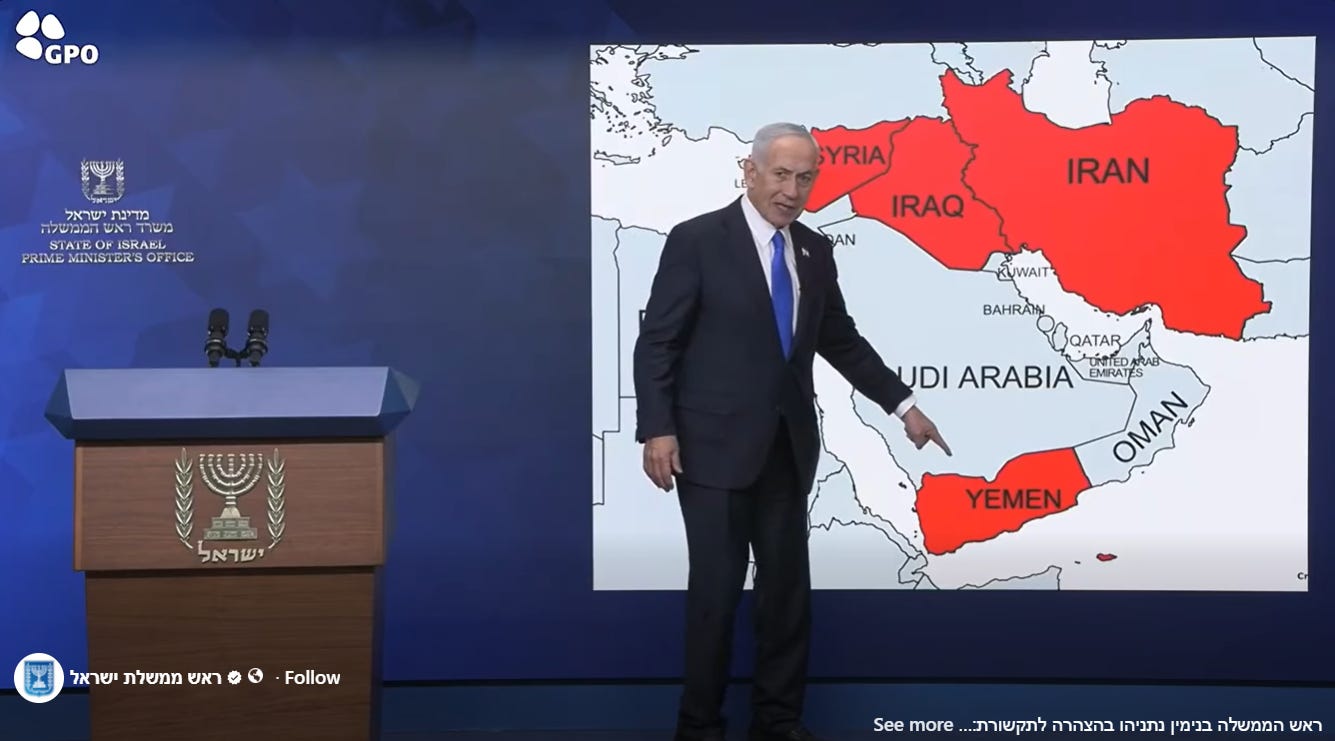
PM Netanyahu is said to be concerned by what he is seeing in internal polls, according to a Likud insider. He chose this week to release a second video address to the public—not a press conference, a rarity in his current term. In it, he again emphasized the war’s “historical achievements,” a move widely seen as another attempt to persuade a skeptical Israeli public.
As to the war Hezbollah: Sixty-five percent of Israeli residents in northern Israel believe the state has abandoned them- according to a special survey for Channel 12 News focused on the Haifa and Northern districts. Only a quarter of respondents say they trust the government to decisively confront Hezbollah. Politically, the balance tilts toward the opposition: 38% say they would vote against the government, compared to 26% who would support the coalition.
Despite this figures, residents of the north are showing remarkable resilience. Eighty percent of respondents say they are not considering leaving the region, compared to just 10% who are.
Findings like these could prove significant for Netanyahu’s re-election campaign, as a broad sense of disappointment takes hold.
The discontent is not with the war’s aims or the decision to confront Iran, but with the gap between what Israeli society endured— more than a month of sustained ballistic-missile strikes on its cities, disrupting nearly every aspect of daily life — and what many Israelis believe they received in return from their government.
And yet, as noted at the outset, this conflict is not over; Netanyahu’s political fortunes are now tied to its outcome.
In understanding the current situation a good place to start is to understand where American interests coincide and where they differ. Both countries understand the danger of a nuclear armed Iran. While the weapons themselves would pose an unacceptable danger to both countries, the more likely problem is that Iran would then have tremendous leverage with which to blackmail the world.
The difference is about the importance of a significant regime change in Iran to the two countries. An Iran without nuclear weapons and without long range ballistic missiles is a considerably smaller threat to the United states then it is to Israel. With or without rockets, we have seen from October 7 that radical Islam is capable of inflicting tremendous pain on Israel.
While 9/11 and several spectacular acts of terrorism within the US woke people up in the US, the threat from this type of violence is sufficiently rare that a substantial portion of the US believes that the way to handle it is through appeasement. For far too many people the reaction to such violence is to worry about it causing Islamophobia.
Support for Israel within the US has always been part sympathy for the Israelis (and Jews) and part strategic. The October 7 invasion and the continuing Iranian backed and funded relentless rocket attacks on Israel have paradoxically created a strange coalition of appeasers within American politics. On the one hand there are the progressives who trace evil in the world to American imperialism. On the other hand, there is the traditional right wing isolationism that now is being fueled by a view that the source of evil is a Jewish cabal with mythical powers over US foreign policy.
Given the importance to Israel of the strategic alliance with the United States, it is important to understand the real differences with American interests, the most important of which is a profound disagreement over settlement policies on the west bank. Whatever the legal justification for building settlements, no American government has ever supported building Jewish settlements on the west bank. It is seen as an unnecessary provocation and one that complicates American relations with the entire Muslim world.
The outcome of the current conflict is unclear. What should be understood by the Israelis is that contrary to the ravings of Tucker Carlson, the Jews and Israelis do not control American foreign and military policies. Large segments of American society are losing sympathy for Israel and that is not good for Israelis or American Jews. While Israel must make decisions based on their own national interest, that interest includes not pursuing policies that run counter to the interests of the United States.