

Missiles at 4:38 a.m., Politics by Noon
Israeli sources lower expectations of regime change in Iran as Netanyahu retreats from the draft-exemption fight — and volatile oil markets are shaping the war’s timeline

Three quick notes on the state of the war.
1. Loweing expectations
The last night in Israel was difficult. There were at least four missile sirens during the night and in the early morning hours, the last one at 04:38 a.m. As a result, most Israelis were unable to sleep for more than about three consecutive hours. The missiles launched from Iran (less than 10) were intercepted.
The IDF says that more than two-thirds of the Iranian missiles capable of reaching Israel are now ‘no longer operational’, and that more than half of the launchers have been destroyed. Many of the underground missile cities built by Iran — essentially massive tunnel complexes — have been blocked following Israeli Air Force strikes.
Within the IDF and the broader security establishment there is some satisfaction with the scale of the strikes, and in the past two days attacks have increasingly focused on targets linked to the Iranian regime’s instruments of repression.
Israeli officials are now adjusting their message regarding the possibility of regime change in Iran, or even a dramatic positive transformation within the regime. At present they say that regime change, or the fall of the regime, may occur only long after the war.
These briefings by political officials appear intended to lower expectations, after Israel— unlike the United States — had strongly signaled aiming for a regime change, including calls by Prime Minister Netanyahu for the Iranian people to rise up.
Military officials have repeatedly said since the beginning of the war that they do not know how to bring about regime change in Iran. The IDF’s focus has been on degrading Iran’s strategic capabilities — primarily its nuclear program, its ballistic missile program, and its military-industrial complex.
Now, however, political figures in Netanyahu’s government are also saying (off-the-record) that the prospect of regime change is “unpredictable,” in their words. They hope that once the most intense phase of the war ends, Iranians might take to the streets or that a significant internal shift could occur, but they do not know whether that will happen. It sounds like a reversal because it is.
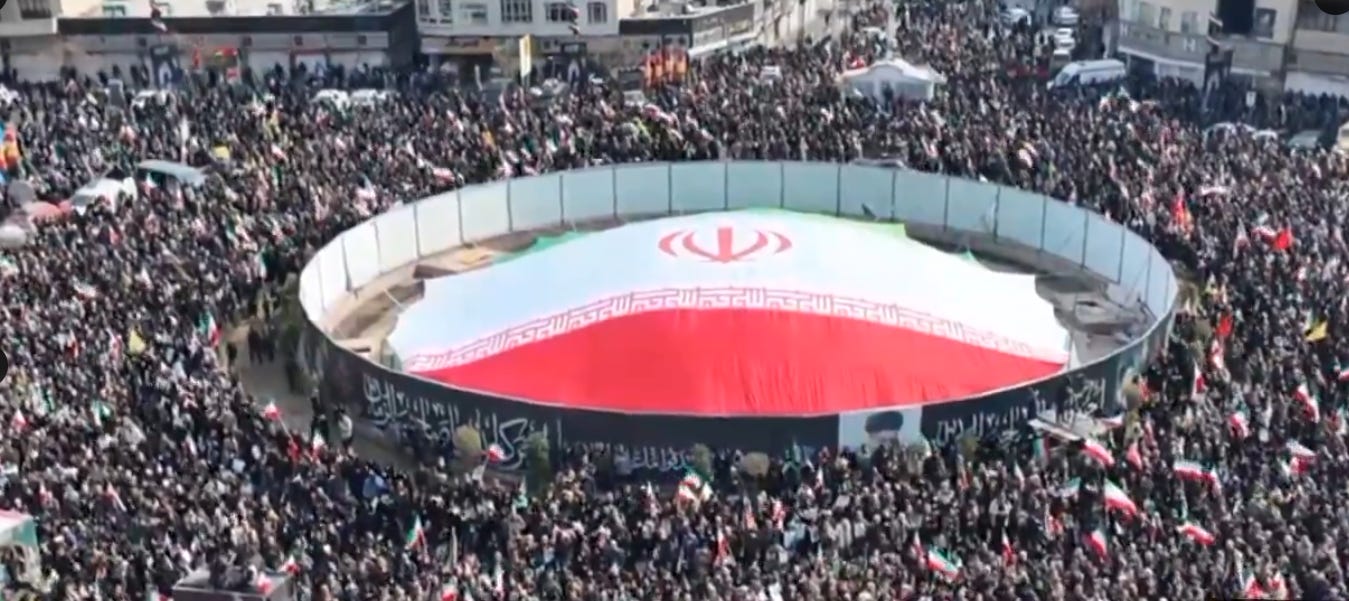
More broadly, Israel’s security establishment says it is seeing inital signs of cracks within the Iranian regime, including soldiers refusing to carry out orders. But there are no mass defections reported and no sign of regime collapse. Iranian command and control appears to be functioning, and their public statements have become more aggressive in recent days — especially as the issue of oil prices and the economic implications of the war have become increasingly significant.

2. Politics During War
The most important political story in Israel over the past day is the Netanyahu government’s decision to abandon its attempt to pass a law formally exempting ultra-Orthodox yeshiva students from military service, or at least setting very modest recruitment targets for a small portion of them.
This decision by Netanyahu does not stem from a change of heart. Until about two weeks ago he had continued to promise his ultra-Orthodox coalition partners that he would pass the legislation.
The draft-exemption bill had provoked widespread public anger in Israel, with polls showing strong resentment. Many Israelis have served hundreds of days in reserve duty during the war, risking their lives, while the government was simultaneously attempting to grant the ultra-Orthodox official confirmation of one of the most unequal arrangements in Israeli society: the rule that anyone studying in a yeshiva —or, more accurately, registered at one — is exempt from military service. Given that the ultra-Orthodox community is by far the fastest-growing segment of Israeli society, this arrangement is not sustainable. The government tried to claim that its law would gradually lead to greater conscription of the ultra-Orthodox. But no one — least of all the ultra-Orthodox themselves — believed it. Which is exactly why they supported it.
During the war Netanyahu ordered the removal of the chairman of the Knesset’s Foreign Affairs and Defense Committee, Yuli Edelstein, because of his opposition to the law. Defense Minister Yoav Gallant was also dismissed, in part because he refused to support it.
Netanyahu’s announcement of a “postponement” of the draft law was made alongside Finance Minister Bezalel Smotrich, with the two saying they would now focus on passing the state budget.
Their statement came after another controversy that swept through Israeli news cycles and social media and, to some extent, overshadowed the war: a late-night government decision to approve no less than 6 billion shekels—about $2 billion—for sectoral interests tied to the ultra-Orthodox community and to the settlements. (The budget included other items as well, but most of the funds were directed there.) The decision sparked outrage, particularly because it was made during wartime.
Netanyahu has now effectively buried the dradt law, which in practice was already politically dead. What has emerged is essentially a deal: the ultra-Orthodox parties will continue to support Netanyahu even though he failed to pass the draft exemption they sought, and in return he will compensate them with additional budgetary allocations.
Israel’s opposition — which since the start of the war has largely rallied behind the government — has sharply attacked the move, focusing on Netanyahu.
3. The Ticking Clock of War — and Oil
Trading in oil futures between Sunday night and Monday morning was extremely volatile. At one point oil prices climbed to nearly $120 per barrel before dropping to around $84 later in the day following a series of statements by the Trump administration.
The market appears highly sensitive to oil prices and increasingly interprets these statements as a signal that the war — regardless of what the administration says publicly — is moving toward its final stages.
Israeli security sources say they understand that the war could end quickly, although they do not necessarily want that outcome. In their view, ending the war now could strengthen and radicalize the Islamic Republic; they would want another two weeks, though, as mentioned earlier, few believe the regime will crumble as a result.
The energy crisis now preoccupying both the West and East Asia is central to understanding the conflict. The Wall Street Journal reported this morning that Iran has in fact increased its oil production in recent days compared with pre-war levels, reaching about 2.1 million barrels per day. According to the report, which relies on a company that monitors oil tanker movements, Iranian and Russian tankers are continuing to pass through the Strait of Hormuz. The primary destination is China.
If these reports are accurate, they are troubling. Without a disruption of Iranian oil exports, the regime’s revenues will continue to flow. In some ways this could be worse than closing the Strait of Hormuz entirely: this means the strait is open — but effectively only for the Iranians.
All of this highlights a fundamental challenge for decision-makers in Jerusalem and Washington. As argued here from the beginning, the Islamic Republic needs only to survive the war in order to portray itself as the victor.
“Anyone who wants a short war should say the war might last forever,” an Israeli former general told me this week. “Long wars happen more often when one side signals distress and wants a quick end.”
One last thought: even our greatest wartime President, Lincoln, needed some wins on the battlefield to continue the war. Despite his unmatched ability to communicate with the American people- despite his Gettysburg Address and his Emancipation Proclamation— he would likely have lost the election in 1864, had Sherman’s army not taken Atlanta, and the history of the civil war and of our nation would have been drastically different. We need to win and that means taking control of the strait of Hormuz and continuing the fight against the Iranian regime.
Another great piece Nadav, thank you.