

Larijani Was the System. Now He’s Gone.
Exclusive: Israeli security officials say the U.S. Army and Navy, with regional partners, had planned for Hormuz disruption before the war

I have spoken in depth with senior Israeli security officials in the last 24 hours. Here are some notes from those conversations, following the strike that reportedly killed Ali Larijani and other senior officials of the Islamic Republic.
Why Larijani; Why Now
As far as Israel is concerned, the elimination of Ali Larijani on March 16th is more significant than the killing of the Supreme Leader at the outset of the current war. Ali Khamenei was Iran’s undisputed leader, but he was also 86; there were limitations stemming from his age. The chief executive, particularly since last year’s 12 Day War, was Larijani himself.
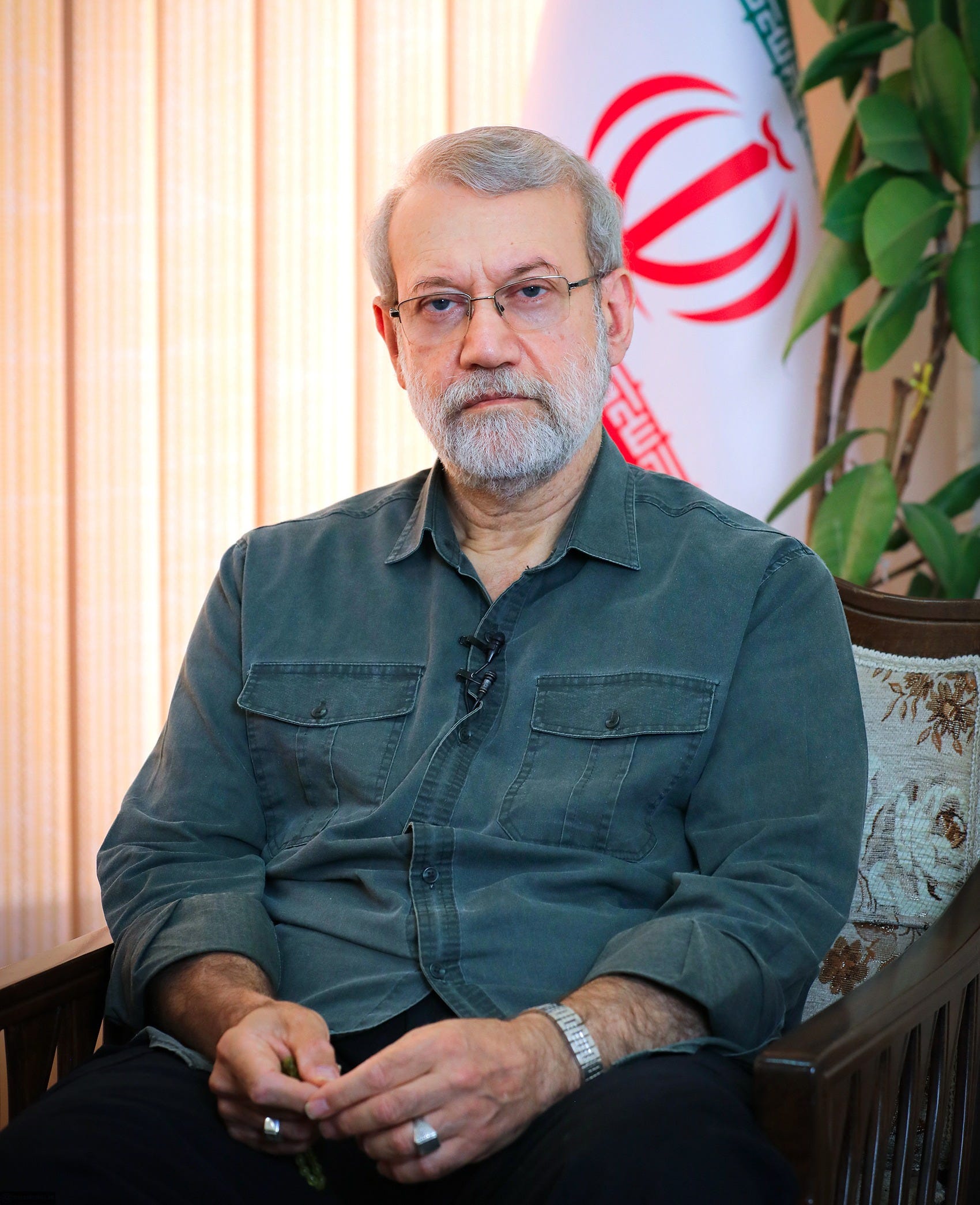

Formally the head of the National Security Council, this bureaucrat, who wrote his thesis on the philosophy of Immanuel Kant, was much more than that. Ali Larijani’s life followed the arc of revolutionary Iran itself — born into one of its most powerful families, rising through its institutions as a Revolutionary Guard, negotiator, and parliament speaker, and ultimately becoming the regime’s ultimate insider.
He personally handled preparations for the current war and the oppression of the opposition uprising beginning in December 2025. In terms of perceived sophistication, capability, and international standing, Larijani was a towering figure in Iran.
“Beyond being the central decision-maker since Khamenei’s elimination, this is the man responsible for crushing the last uprising, for the deaths of many thousands. That says everything about him. This is the man,” officials in the security establishment told me.
There is another reason this strike is so important: the assassinations at the start of the war demonstrated deep Israeli intelligence penetration of the Iranian establishment. But they also relied on deception and surprise at Iran’s expense. The events of two nights ago demonstrate that Iran’s systems remain exposed, even after the Islamic Republic activated its emergency plans to protect senior officials.
In other words, Larijani’s killing showed that Israeli military intelligence (AMAN) can obtain rare, real-time intelligence during the war, not only collect targets in advance.


“Reaching these people was especially challenging; they feel hunted — this is the behavior of terrorists on the run,” said one senior security source.
The same night Larijani was killed, Israel eliminated Gholamreza Soleimani, the commander of the Basij force — Iran’s ideological volunteer militia — used by the regime to crush dissent and project a sense of control. Soleimani was killed in a makeshift tent in Teheran — attempting to evade an Israeli strike. “They lost their assets — bases, apartments, headquarters — and are finding alternative solutions,” the Israeli security source told me. “We managed to expose their new locations. This is also true for surface-to-surface missile units and other ground forces.”
State of Play: A Regime Under Pressure, Not Collapse
The tactical attacks on Basij checkpoints and the killing of senior leadership are intended to deter the Basij from continuing to suppress the Iranian opposition.
Because the Basij is a volunteer organization, its rank-and-file join freely, and therefore “we’re already seeing here and there desertions, failure to report, simply not showing up for shifts. A sense of being hunted. They were attacked last night in tents — because they had nowhere else to go after other locations were exposed and struck.”
In Israel, increasing disruption in Iran’s decision-making processes is being identified. After Khamenei’s killing, it was Larijani who made the decisions —and now no one, in the West or in Iran, knows who will make them going forward.
It is not entirely clear whether the new leader, Mojtaba Khamenei, can issue orders — both due to his medical condition and, above all, because any communication with him or his entourage could expose his location.
Still, the IRGC has remaining capabilities. “There is determination within the Revolutionary Guards,” another source tells me. “They understand this is the battle of their lives, and there is still operational capability on the ground. People are willing to emerge from tunnels, risk their lives, and fire. But there are significant difficulties in command and control, and orders that come out distorted, far from what was intended,” says another source.
“On the other hand, one must look at the full picture. There is no truly senior Iranian commander who has defected or moved to another country — for now.”
This is the situation reflected in IDF assessments to the political leadership: there is no regime collapse; there are many cracks; no mass defections; command and control exist, but are highly limited and severely disrupted.
The Strategic Aim — and the Hormuz Constraint
The IDF continues to emphasize that its own mission is not regime change. This line has been stated since the beginning of the war and has been reiterated in recent days by senior military command on the record — even after Larijani’s elimination.
A senior security official laid out the vision to me:
“The objective is to push back the strategic threats to the State of Israel, and this is being done methodically. We have work to do. Even if the regime survives, on the day after the kinetic phase [i.e. the bombing], it should wake up and discover that its capabilities have been so degraded that it will be occupied mainly with reconstruction. Not with destroying Israel, not with supporting proxies in the region — for example, the $1.5 billion they transferred to Hezbollah in the last two years. Every passing day means billions in damage to Iran and the Revolutionary Guards. The scale at which we are destroying Iran’s military industry is enormous.
“Imagine Israel waking up after several weeks of war and looking around to find no IMI, no Rafael, no Israel Aerospace Industries, no R&D, no Directorate of Defense R&D, no military industry. That is the level of infrastructural damage we are dealing them. And there is no high-tech sector building the technological backbone that will survive this. That is the depth of our campaign — and the insurance policy for the state of Israel, the day after.”
In Israel, it is understood that the central point of vulnerability in the war lies in Iran’s control and use of the Strait of Hormuz and its impact on energy prices. The consequences are not sufficiently reported: developing countries are beginning to cut energy consumption due to natural gas prices; a crisis is emerging in the fertilizer market; every day of high oil prices will affect the American economy months ahead — and that is assuming prices do not rise further.
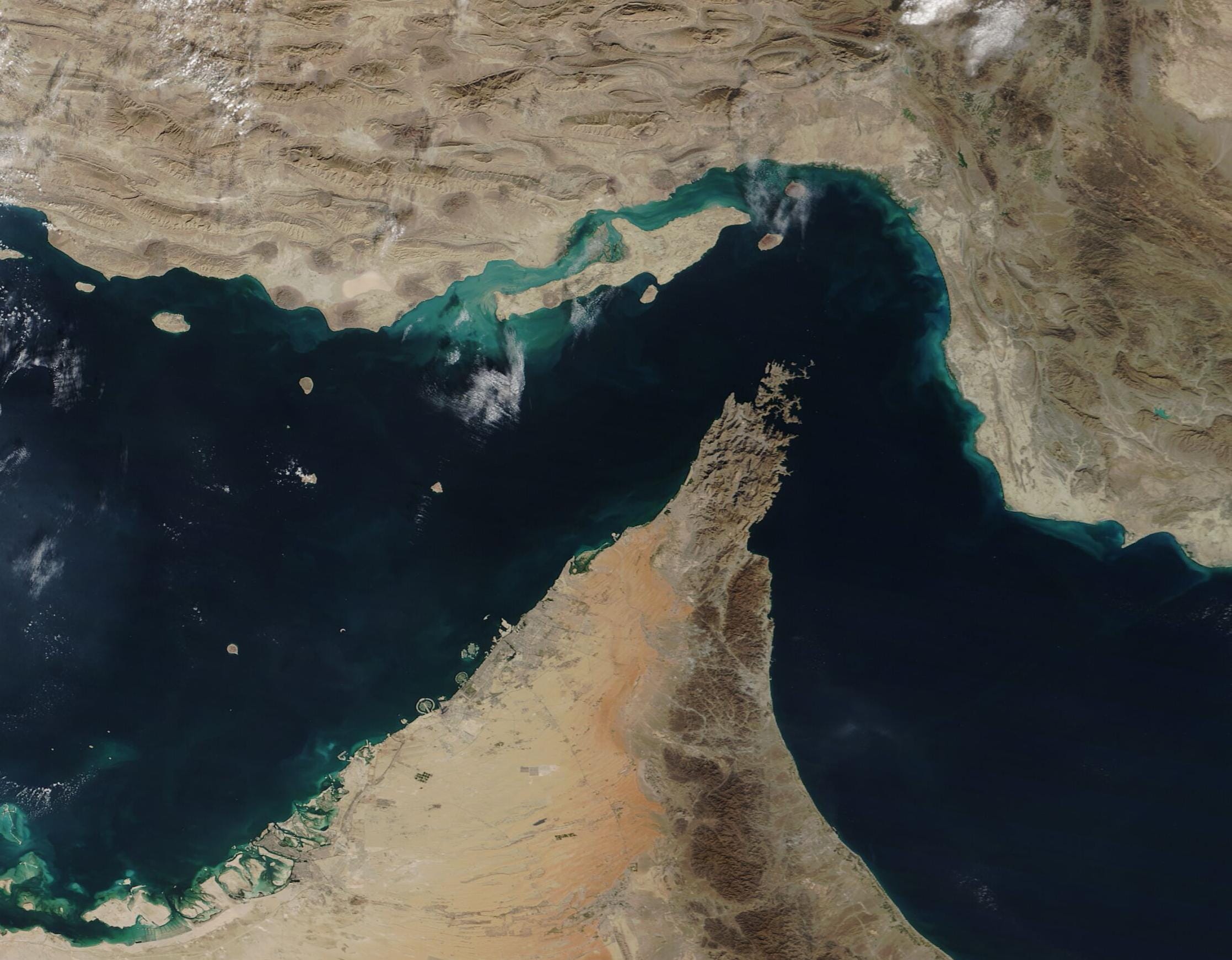
As reported here in recent days, there is close coordination between Washington and Jerusalem regarding reopening the maritime passage. The understanding in Israel is that the United States is trying to apply massive pressure on Tehran — even amid the war — to climb down from closing the strait (it is not fully closed; Tehran allows countries it favors to pass freely).
In Israel, senior security officials say that, from their experience, the Americans knew, prepared, and planned for the scenario of Hormuz being closed. That was the assessment in Israeli intelligence — and in the United States as well. “These people,” says one Israeli security official of the Americans, “are professionals — serious military and political officials. They assessed this might happen and planned for it — and any other argument is factually not true.”
As for Iran’s military ability to hold the Strait of Hormuz, Israel’s current assessment is that most of the Revolutionary Guards’ relevant capabilities — the navy, small speed boats, anti-ship missiles, UAVs — meant to disrupt control of Hormuz are no longer operational. The cost of taking control would not be high, if there is early and thorough preparation, Israeli officials say.
The political leadership continues to assess that the United States has the ability to attempt to enforce the reopening of traffic in the Persian Gulf even without using force. One official told me, “the Iranians still have a great deal to lose, and pressure points on them that have not yet been activated, even before a massive military operation in the Strait.”
The reference, one may assume, is to Iran’s oil and energy facilities, which have enjoyed relative immunity since the beginning of the campaign — even as Tehran continues to attack those of its neighbors.
Thank you, Nadav, as always for keeping us updated. The noose is tightening around Iran’s already fragile regime. The fact that Trump has postponed the meeting with China for another month sends a clear message to everyone - especially the regime- that Israel will continue its relentless pursuit of the leadership for several more weeks at least, in addition to degrading even further its military capabilities all across the board. The strait of Hormuz will, one way or another, be effectively reopened because all the incentives compel it, both economically and strategically. It may take some time, but Trump has shown he has the stomach to stick it out and continue the fight and deny the regime the capability of controlling traffic in the strait. And Israel, its indispensable ally in this project against the regime, will be right there by its side.
Such great news! In a world where the MSM repeats their 'losing' storyline, I love the truth. There was a typo that was really a hoot... "Soleimani was killed in a make-shit tent in Teheran" ... A truly prophetic accident! Thank you for your great reporting, Nadav!