

First Read: Iran’s New Nuclear Weapon Attempt
New intelligence suggests Iran explored an ambitious, untested idea: a pure-fusion nuclear weapon

It began quietly, these things usually do, with what Israeli officials described to me as “troubling signs.” At the start of the war, a few months after October 7, 2023, signals came from Iran - fragmentary and easy to dismiss - that did not fit the familiar patterns of uranium enrichment or weaponization. They pointed somewhere stranger. More ambitious. Almost fantastical.
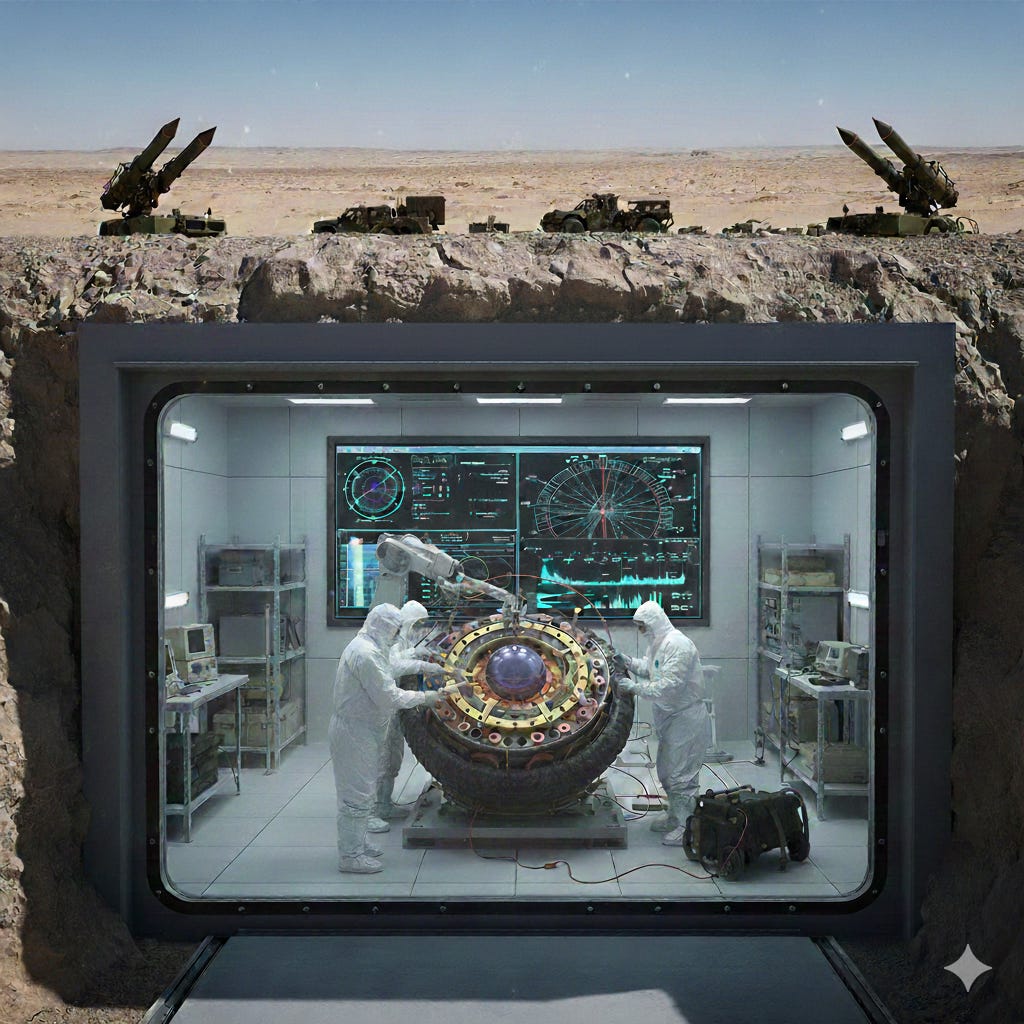
The assessment that took shape was unsettling: Iran was exploring a new kind of nuclear weapon. Not a bomb based on enrichment, and not even a thermonuclear device in the classic sense - but something no country has ever built. The professional expression is a ‘fourth-generation weapon’. Pure fusion.
To understand why this matters, here’s a brief detour. Conventional nuclear weapons are based on fission: split the atom and release enormous energy. Thermonuclear weapons add another layer - using a small fission bomb to ignite hydrogen atoms, whose fusion releases even greater power. Iran, however, appeared to be examining an extremely hard challenge: fusion without fission. No uranium. No plutonium. Minimal radiation. Little fallout. In theory, a smaller, cleaner, and far harder-to-regulate nuclear weapon.
It is, by any measure, a megalomaniacal ambition. Fusion is highly complex even under laboratory conditions. No army or research institute anywhere - so far as is known - has produced a fusion bomb. The assessments were blunt: Iran’s ability to actually build such a weapon is close to zero. And yet, according to a position paper published a few months ago by Maj. Gen. (res.) Tamir Hayman, the effort was real - to design a fusion-based nuclear warhead. CIA sources were also quoted recently at the Washington Post.
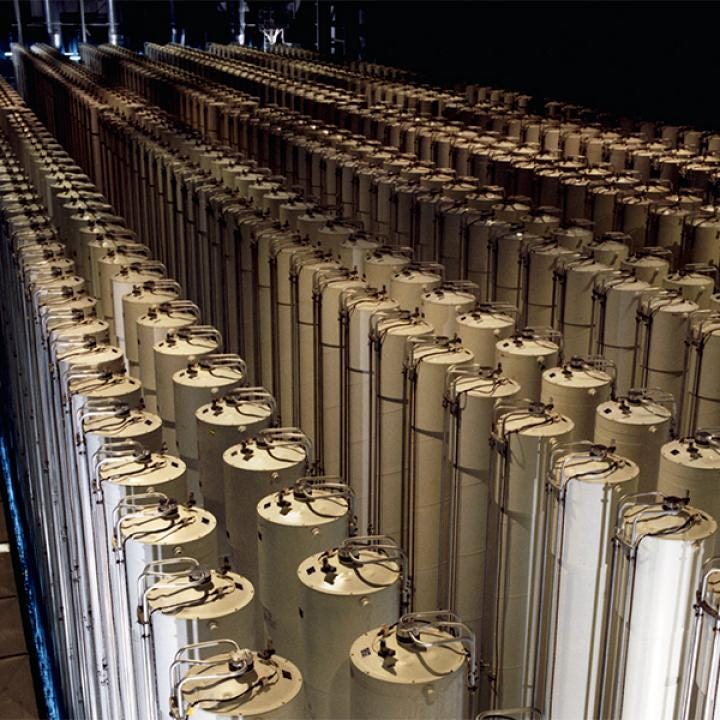
Why would Iran go there, after investing billions - likely tens of billions - into a conventional nuclear program built around uranium enrichment?
Several explanations were made.
*One was deception: a smokescreen intended to conceal a renewed dash toward a standard nuclear bomb.
*Another took Iran’s religious edicts at face value- the fatwa attributed to Khomeini against nuclear weapons- and suggested a legal workaround of sorts: fusion, Tehran could argue, falls outside the Nuclear Non-Proliferation Treaty and the relgious ban. Or maybe, Western security sources speculated, the Iranian nuclear scientists are trying to decieve their own leaders?
A third explanation combined the two. Iran wanted to learn. By attempting military fusion, it would be well prepared for a future breakout to a bomb, having confronted (even with no success) one of the hardest technological challenges.
Israel struck in Iran, and I would make the calculated assessment that it sought to destroy all elements of this provocative plan as well. However, former officials tell me that this entire episode reveals something deeper about Iran’s resolve to obtain a bomb: a willingness to invest whatever it takes- to be innovative and ambitious, and to surprise.
Inside the Israeli Military Intelligence (AMAN), the lesson is drilled relentlessly after the failure of October 7: after the IDF triumph of 1967 came the shock of the Arab surprise attack of 1973. In today’s metaphore, 1967 is the twelve-day war with Iran. The fear is to fall, yet again, to the trap of hubris.
The Air Force lives by the same rule. Officers there still study how Egypt absorbed the trauma of Operation MOKED in 1967 and applied its lessons in the opening days of the Yom Kippur War.
Senior commanders in both branches are enduring interrupted nights. Somewhere between sleep and waking, the same question intrudes: What does the enemy think? What is he planning - and what will he do next? Israelis can only hope that the failure of October 7 is etched more deeply to these officer’s mind than the recent success against Iran.
***
Roughly six months have passed since that war- perhaps the most successful in Israel’s history. The enemy was hit hard. A massive technological challenge was overcome with operational daring and, above all, exceptional intelligence. Israel’s losses were minimal; the outcome decisive. There was a strategic bonus: the United States joined in.
The deeper lesson, though, is simpler. Surprise works. It can compensate for vast gaps in quality - as when Hamas, with no armor and no real air force, invaded Israel. Surprise doesn’t always decide wars, but it can reorder the strategic map overnight.
It is easy to surprise; easier than most armies believe. It is much harder to dismantle complacency once it sets in. Back in June 2025, the Iranians knew Israel was preparing to strike. Local and global media were saturated with hints of an imminent attack. And yet they were surprised - especially by the lethality of the blow and the deception surrounding it.
Now the region is in a race. “A race to the next surprise,” as one senior officer put it to me. A coordinated missile and drone assault by Hezbollah, Iran, and the Houthis. A ground incursion. Or an Iranian miscalculation—concluding Israel is about to strike and choosing to strike first. The scenarios are endless.
After the Simchat Torah massacre, Military Intelligence quietly buried the phrase “intelligence superiority.” It became taboo; the original sin. In its place came a different creed, still awkward, still unfinished: sanctifying doubt. What are we missing? What won’t we know? What is already unfolding beyond the edge of our understanding?
The story of Iran’s fusion experiment captures all of this at once: the regime’s technological ambition, the willingness of a collapsing economy and a water-starved state to pour resources into a near-imaginary weapon—and the uncomfortable truth that surprise, even now, remains very much alive.
Nadav, Thank you! Always excellent reporting and thoughtful opinion making us smarter. Great hearing you on Call Me Back! שבת שלום ומבורך