

Breaking: Trump Pauses Ultimatum and Moves Toward Talks with Iran
Israeli officials say missile launches won’t reach zero even if the war lasts long; Rising Jewish Extremist Violence in the West Bank— and an Unusual IDF Warning

Hours before the expiration of President Trump’s ultimatum:
The major development of the day is his dramatic announcement of what he described as “productive conversations” with Iran, aimed at a “complete and total resolution” of hostilities in the Middle East.
Markets reacted immediately, rebounding on the news. It also aligns with sources reporting that Turkey, Pakistan, Egypt and other regional actors are engaged in intensive behind-the-scenes efforts to halt the war before it escalates into robust attacks on energy infrastructure across the region.
There are no public indications that Iran is prepared to make these concessions: relinquishing its nuclear program or transferring enriched material, accepting meaningful limits on its ballistic missile capabilities, or ending its support for proxy militias and armed groups across the region. The president has already signaled that, in his view, this war will not be decided by formal Iranian concessions, but by the degradation of its military capabilities — and that threshold, he believes, has largely been reached.
What remains is narrower and critical for global economy: the current focus of the war, the Strait of Hormuz. A central question now is whether Iran will agree— quickly — to reopen the Strait. If it begins attaching significant conditions, it will signal that Tehran believes Washington blinked first.
By sharply escalating the threat of force, the administration sought to create enough pressure to open a diplomatic channel. Whether that calculation succeeds —or simply postpones a more dangerous confrontation — remains uncertain. The markets are pricing a breakthrough.
No matter how the war ends, the Islamic Republic will claim victory — as regimes of this kind tend to do. Its argument would be straightforward: the regime has survived. It has continued to strike its adversaries. And it has demonstrated the ability not only to threaten the closure of the Strait of Hormuz, but to close it selectively, only to its enemies. If no commitment is made to end its nuclear enrichment program — or to transfer its stockpile of highly enriched material — this too will be framed in Tehran as a success.
On the other hand, if Iran were to relinquish even part of its stockpile, or accept meaningful limits on its ballistic missile program, this would be seen in Israel and Washington as a clear victory.
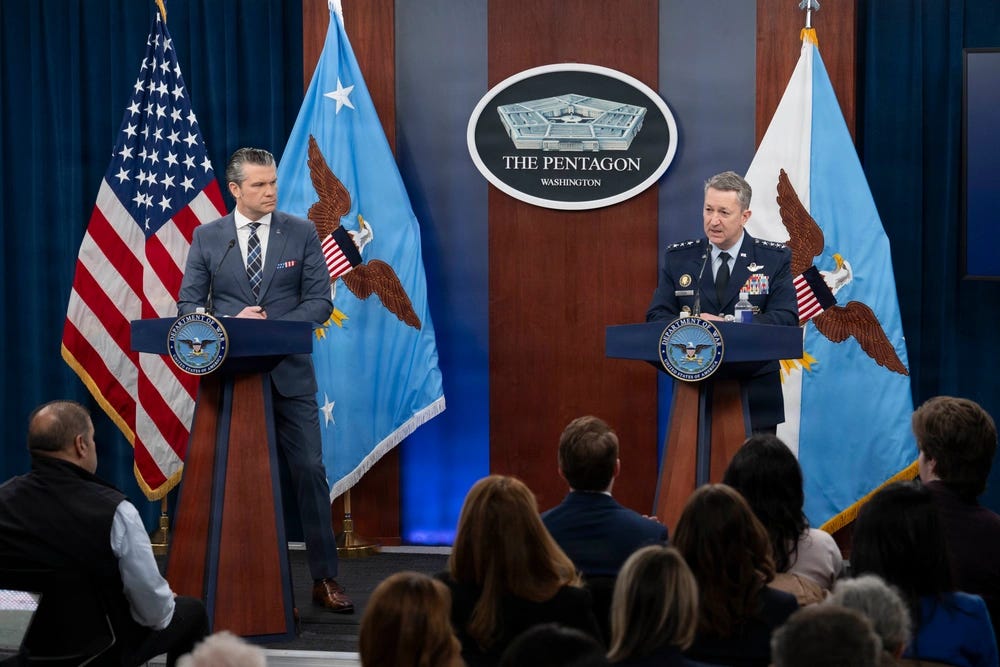
In Israel, even a minimalist outcome could be presented as success: Iran has been significantly degraded as a military. But many Iran experts would argue the opposite — that the regime has been further radicalized, not weakened.
Much of this remains speculation. The critical question is what, if anything, has been agreed behind closed doors.
Notably, Iran’s foreign ministry has initially pushed back, with officials in local media denying the president’s announcement — another reminder of how fluid, and uncertain, the situation remains.
The War’s Gordian Knot
The United States can achieve any military objective it sets — but it will take time, and the political and economic costs could be significant. Israeli officials tell me they have been signaled by the United States to prepare for at least another two weeks of the campaign. Is the United States prepared to continue for long? Perhaps. But the message perceived in the Middle East — and in global markets — is that it is not. That perception gives Iran hope; today’s postponement of the ultimatum, in favor of “productive” talks, will be read in Tehran as total confirmation. The constraints facing the United States and Israel are increasingly complex, amid a worsening global economic outlook.
A forced opening of the Strait of Hormuz could trigger Iranian attacks on regional energy infrastructure — creating a situation in which the Strait is technically open, but oil is not flowing. In that case, the entire purpose of opening the strait is defeated.
Talk of seizing Kharg Island — Iran’s main oil export terminal, responsible for roughly 90% of exports — is at times superficial. Iran has alternative terminals and alternative routes. During periods of maximum pressure, it reduced its oil exports by 90% without fundamentally changing its policy (Kharg controls about 90% of its oil exports). Capturing Kharg is not equivalent to opening Hormuz, and the problem there would be also maintaining control of it.
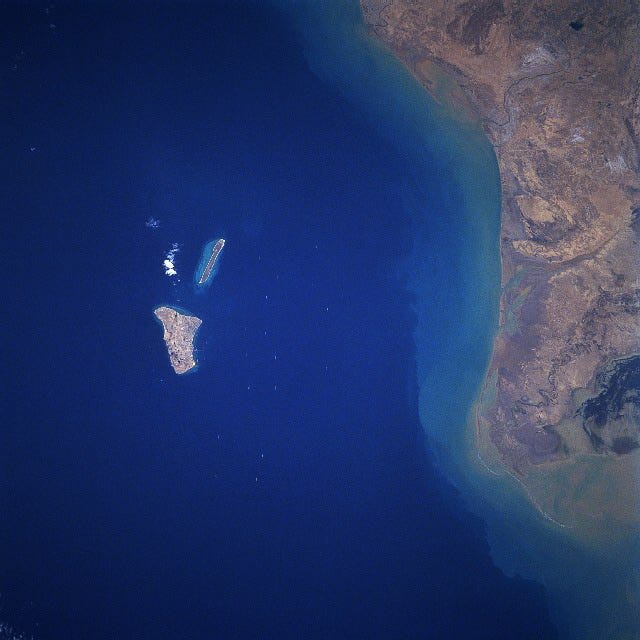

Iran continues to produce about 1.5 million barrels of oil per day. The regime benefits from rising oil revenues even as it strains the global economy. Yet a massive military effort to halt this abnormal situation could itself choke the global economy — through damage to energy infrastructure and further escalation. Concerns over inflation and supply chains help explain the easing of sanctions on Iranian oil already at sea.
This is a paradox that reveals the core constraint of the war: oil must flow to sustain the global economy and the war’s legitimacy — but as long as oil flows, Iran profits and can more easily continue the war, while its neighbors suffer.
This is the Gordian knot President Trump is trying to cut with a single stroke: an ultimatum. “Never give yourself ultimatums,” warned the late Israeli prime minister Levi Eshkol. Soon, we will know who benefited from this one.
Israel Does Not Expect to Neutralize Iran’s Missile Capabilities Before the War Ends
“If anyone imagines that on the last day of this war Iran will no longer be able to launch missiles at Israel — that’s an illusion,” a senior Israeli security official told me last night. We spoke on a secure line; in the background, loudspeakers in the command center announced an alert.
Yes, the Iranian capabilities are being degraded. But not erased.
“Think of it like a pot of boiling water,” he said. “We’re treating the water — and covering the pot, to reduce the effect.” He wouldn’t elaborate.
Despite the damage from recent Iranian strikes in the southern towns of Arad and Dimona, Iranian capabilities are not expanding. The shape of the graph remains relatively consistent, almost asymptotic:
Iran’s occasional successes in penetrating the missile defense system are inherent to the statistics of this kind of warfare, say Israeli sources, rather than reflecting a deeper failure or dwindling interceptor stockpile. Still, there is no doubt that interceptor limitations matter daily. There are interceptors, and there are interceptors. Arrow-3 operates in space, striking missiles earlier and farther out; Arrow-2 engages them later, inside the atmosphere, with less room for error.


“We are hitting them hard, and daily. It’s not fun to be in the missile units of the Revolutionary Guards right now,” the official said dryly. “Their situation is difficult for them —and getting worse.” And yet, when the war ends — whether in a week or two — Iran will still be able to launch missiles at Israel, he predicted.
Jewish Violence in the West Bank
While attention is fixed on Iran, the IDF is increasingly alarmed by developments in the West Bank and by organized acts of Jewish terrorism. Violent attacks by far-right, armed settlers against Palestinian communities have risen significantly. Between Saturday and Sunday, at least 20 separate attacks by Jewish extremists across the West Bank were reported, according to Israeli security sources. These included attempted arson of homes and vehicles, stone-throwing, road blockages, and fireworks fired into the air. At least 11 Palestinians were injured. One Israeli security official told me the attacks this week are unprecedented in scale and in the number of perpetrators involved.
On their Telegram channels, far-right activists openly take pride in what they describe as a sacred goal: expelling Palestinians, community by community — beginning with Area C of the West Bank, then Area B, and ultimately Area A, which is under the control of the Palestinian Authority.
The situation is deteriorating so rapidly that Prime Minister Netanyahu — who has largely kept his distance from the issue, wary of provoking his political base — held a meeting with the heads of the security services and “demanded” an end to the “nationalist violence” in the West Bank.
Last week, IDF Chief of Staff Lt. Gen. Eyal Zamir warned of “rioters who do not represent the settlement movement,” stressing that they endanger not only security, but “our values as a people and a state.” His most important line was a call for all state bodies to act “before it is too late,” since these actions “are causing extraordinary strategic damage to the IDF’s efforts.”
In effect, this was the IDF pointing a finger at the Israeli police, the Shin Bet, and the ruling coalition. The police is controlled by Itamar Ben Gvir, a convicted felon and a follower of the Kahanist ideology, who is seen as a key political enabler of Jewish extremism.
A serious question is what the Chief of Staff meant by “before it is too late.”
There are two trajectories.
The first is a widespread, violent Palestinian uprising. Elements of the far right — now inside the mainstream — view this not as a danger but as an opportunity: the collapse of the Palestinian Authority, and the possibility of large-scale expulsions under military cover. For the IDF, this is a nightmare. For ideological extremists, it is a vision of redemption.
The second is quieter, but no less dangerous: the transformation of Jewish extremist violence into an organized terrorist movement with strategic intent. In the 1980s, the far-right Jewish Underground plotted to blow up Al-Aqsa; the plot was foiled by the Shin Bet. It is difficult to argue that the underlying sentiment has disappeared, given the growing legitimacy of Jewish fundamentalism.
The IDF Central Command chief sent a letter last week to settlement community leaders, acknowledging the phenomenon as “dangerous, severe, and unacceptable.” Yet assurances that “this cannot continue” ring hollow.
Similar warnings were issued before. The phenomenon did not stop; it expanded. In some cases, IDF reservists in uniform were documented assisting or enabling it.
The Threat
This is the writing on the wall, as acknowledged by multiple security sources: Jewish terrorism in the West Bank — beyond its profound moral failure — is becoming a strategic threat. Its consequences may unfold in ways no one can fully anticipate. The political leadership is operating within an increasingly radicalized framework. And the IDF, as the sovereign authority in the territories under Israel’s control, carries a legal obligation to act — even when other institutions fail.
If the IDF is so serious about accountability why haven’t they arrested the soldiers who killed a family last week? It’s hard for me to be a Zionist these days.
The Iranian regime always lies (propagandizes) and Trump is usually lying or exaggerating how great he’s doing. When neither side has a reputation for telling the truth, there’s no way to know what’s actually happening.