

After October 7: The Real Power Struggle
As the army investigates itself and the government evades responsibility, the rift between Eyal Zamir and the political ruling class widens. October 7 is being weaponized

In the two years since October 7, the tensions inside Israel’s governing system has cracked open: the clash between a military command that insists on professional authority, and a political leadership- headed by a prime minister with an unusually long memory - that sees the IDF as a center of power that must finally be subdued. This tension did not begin on October 7. It sharpened during the judicial overhaul, when senior security officials warned publicly of the dangers to national cohesion and lower ranking officers in the reserves threatened to stop volunteering; Netanyahu and his circle viewed those warnings as political defiance, an insubordination.
What followed the catastrophe of October 7 poured gasoline onto this strain. The army was willing to investigate itself, to publish its failures, and to accept personal responsibility, with former chief of staff Halevi resigning- moves that highlighted, by contrast, the prime minister’s determination to evade any state commission inquiry into his own decisions. Its clear the government is dead set to turn the army’s internal reckoning into a political battlefield, and to reshape the IDF, using its own crisis. Its their application of the shock doctrine.
It was against this backdrop that this week’s state memorial for David Ben-Gurion took place in Sde Boker.
Netanyahu, once again, did not attend. Last year, he did not attend because of the war. The year before, marking 50 years since the death of the founder of the state, Israel was in the grip of the very beginning of the October 7 war; the ceremony was canceled. This year one could imagine Netanyahu showing up at Sde Boker with a deep speech about rebuilding the nation after the war, about national security.
Well, no. The government sent Yitzhak Wasserlauf of Itamar Ben-Gvir’s “Jewish Power” party. Yariv Ben-Eliezer, Ben-Gurion’s grandson, said at the memorial that sending a Kahane disciple was “a finger in the eye” of his grandfather’s admirers.
He is mistaken. This is not a provocation but a harmony of extremism. Wasserlauf is the Minister for the Negev and Galilee, and no one in the Cabinet Secretariat thinks there is any problem with Kahanism.
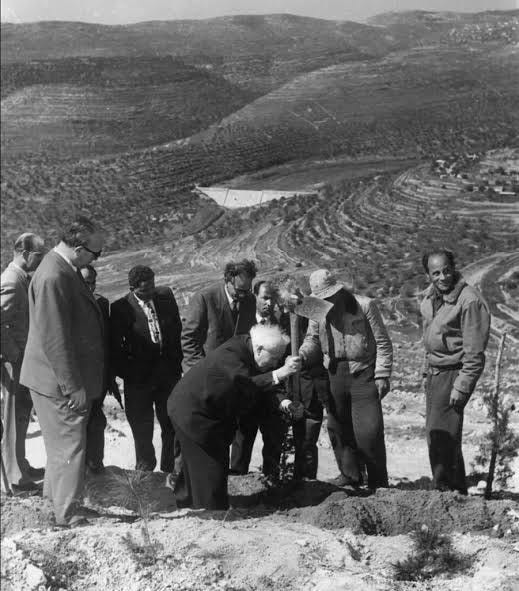
The symbolism of it calls to mind a report published last week by Nir Hasson: the cedar tree that David Ben-Gurion planted in 1958 on the western side of Mount Herzl is dying. According to JNF, it cannot be saved, and the blame lies with “the climate crisis.” But not far from there, on that same mountain, other cedars are thriving. Apparently, nobody cared.
Eyal Zamir arrived at Sde Boker together with the General Staff forum. A segment from the IDF Chief of Staff’s speech was widely quoted: “Explanation alone is not enough, criticism alone is not enough. What is needed is leadership that is courageous, purposeful, and changes reality. Leadership that recognizes failure and also dares to lead change. Not leadership that frightens and drowns, but leadership that lifts, with inspiration.”
One must be naïve or foolish to think that Netanyahu and Katz would not recognize this as criticism of them. Zamir falls to neither category. In my view, his next line was more important: “This is our command test- not only to engage with what was, but to lead toward what will be.”

In other words: the Chief of Staff believes one must look toward the future. Continued political rummaging in the scar of the October 7 failure will lead to contamination, to a weakening of the IDF.
The politicians want an independent inquiry, including into the IDF? the IDF supports that. Zamir himself chose not to insist on the word “state-commission” regarding the inquiry committee, because the term had become a burning political issue (Netanyahu has ruled out such a commission). As for the review of the Army’s internal investigations, it was he who established the Turjeman Committee, that re-examined those Army investigations. To carry on with this endlessly—an investigation, a review of the investigation, criticism of the review, and so forth in an endless loop? The Chief of Staff trying to say: enough. Last week, Zamir formally removed from reserve duty several top-ranking former commanders - including former heads of Military Intelligence, Operations Directorate and Southern Command- and issued reprimands for others still in service.
Government sources explode in anger in response. They claim that Zamir, in his initial conversations with Defense Minister Katz before his formal appointment, informed him that he intended to immediately dismiss two major generals, to signal a restoration of trust and accountability. “It was the Government that prevented this, because of Iran, and the need to be ready for this war,” they say. “Now Zamir has moved from being an independent Chief of Staff to an opposition Chief of Staff. There is no intention to fire him or push him out, but it’s unacceptable that the Defense Minister learns via a push notification on Ynet about the Chief of Staff’s personal conclusions following the October 7 military investigations.”
Within the defense establishment the answer is that had Zamir informed Katz earlier, one of two scenarios would have occurred:
The minister would have leaked it before the official notification to the Officers and would say that he had “ordered” or “directed” the Chief of Staff to reach these conclusions- thus turning the entire matter into a political, rather than professional, affair.
Or, Katz would have tried to dissuade the Chief of Staff from acting as he did, which would have led to a nuclear-level collision. “This was a professional decision, within the Chief of Staff’s authority, following a professional review of inquiries that are military tools,” said a defense source.
According to Katz and ministers in the government, it is impossible that “throughout the IDF, eight officers- eight!- will pay the price for this failure with a step like not being called up for reserve duty.” Some of the bereaved parents support this approach, and Katz felt encouraged this week by the messages he received from them.
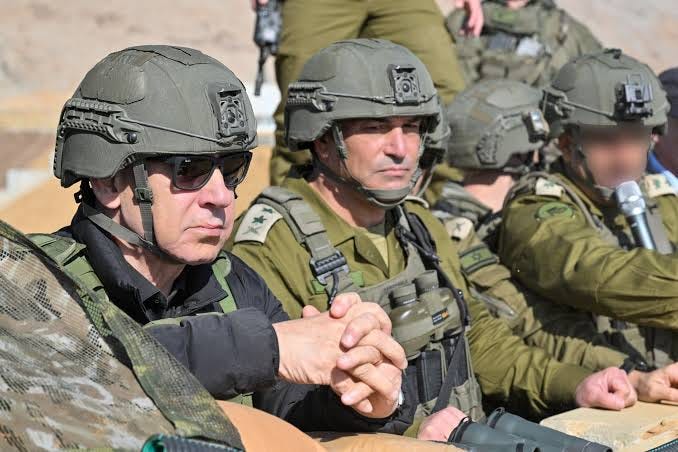
Factually, far more than eight have paid a price: from a Chief of Staff who decided to end his term early (in Likud they have become nostalgic for Herzi Halevi; one official told me this week: “He’s the one who rebuilt the army! Let’s not forget that!”), to Military Intelligence chief Aharon Haliva, and dozens of other officers who retired or were forced to retire in light of the failure. They will go to sleep every night and wake up every morning carrying their immense failure.
The government wants to see dozens of officers sent home. People close to Minister Katz told me that Turjeman recommended assigning responsibility not only to the officers who held their roles on October 7, but also to those who held responsible positions beforehand. In the IDF they identify the demand for mass dismissals as an unequivocal political attempt to carry out a purge- to leverage the October 7 failure to reshape the IDF and turn it into something like the Israel Police, long seen as weak and sensitive to To keep kicking the IDF again and again, while the political echelon itself is unwilling to conduct even the most minimal inquiry into its own conduct.
This is not a substantive dispute; it is a multi-front, brute power struggle. Katz believes that Zamir owes him personally for his appointment, and that he has difficulty accepting the authority of the government.
Zamir tells his colleagues in the General Staff that he has not “flipped,” because he never made any deal in exchange for his appointment; in his view he is committed to professional, responsible, proper command of the IDF under the directives of the government. This might cost him dearly: this week, far- right minister Smotrich said in an interview that “In the US, the chief of staff would have received a phone call from Trump who would fire him on the spot.”