A Day Like No Other
At the end of the Gaza war, Israel feels the tremor of healing

The headline from this day is not any word spoken by a leader - not even by the most powerful man in the world, in an extraordinary speech at the Knesset.
The headline comes from the few tearful words, repeated again and again, of Einav Zangauker to her son Matan:
“My life, you are my life. Champion, hero. I’d give my life for you.”
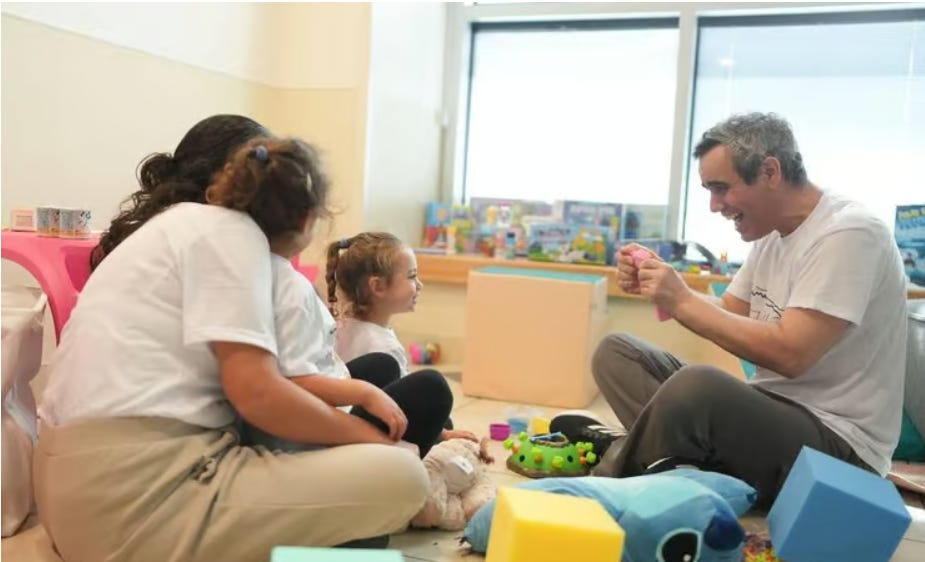
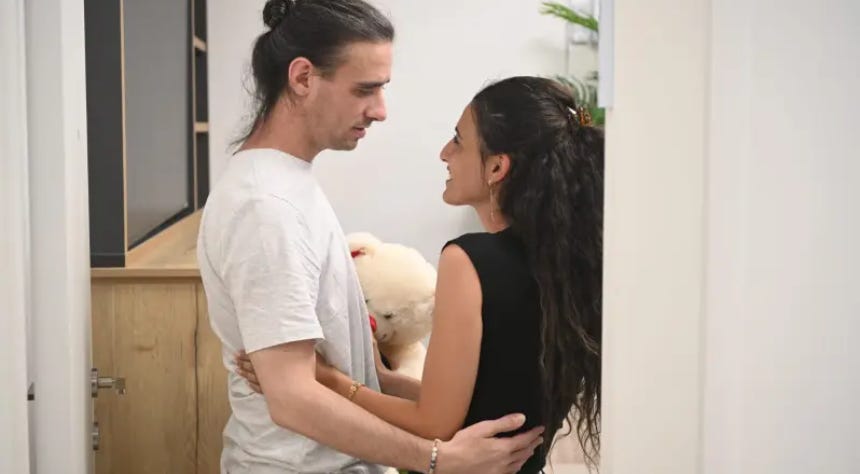
Some might call this an image of victory - and today we received twenty such images, for every hostage returning. But the word “victory” doesn’t really fit.
It is an image of healing - or the beginning of healing - for an entire nation.
The tremor that passed through Israelis, from one video of a reunion to the next, was the tremor of that healing, but also an ending. The end of an era.
Not a full end: the bodies of the fallen are still in Gaza, and their families endured another unbearable day. Nor an “total” victory - because Hamas still rules the Strip, armed, and the future is uncertain. But between the brothers Gali and Ziv Berman in their Maccabi Tel Aviv shirts; Eitan Mor, hugging his parents and saying he’d bragged in Gaza about the education they gave him; and Alon Ohel in the helicopter, holding a sign with lyrics by Israeli rock and folk legend Shalom Hanoch - “The source of my strength, laughter and tears / the end of my suffering” - hope outweighed despair today.
The perfect ending to an extraordinary day for Israelis came with the American president’s speech at the Knesset. It was vintage Trump.
When he faces an admiring crowd, Trump is generous with compliments - and with headlines. Short of a MAGA rally, there is no and never will be a more admiring audience for him than the Knesset of Israel - both coalition and opposition.
Israelis have much to learn from the U.S. president’s readiness to give so much generous credit to others; he devoted a large part of his speech to that.
His description of Steve Witkoff as “a Kissinger who doesn’t leak” will enter the annals of quotation, as will his anecdotes about the Chairman of the Joint Chiefs, General Kane; his musings on how much money Miriam Adelson has in the bank; or his positive personal impression of Opposition Leader Lapid.
Politically, there’s no doubt that his public call for a pardon for Netanyahu was the most important headline. “Who cares about cigars and champagne,” said the American president, with a direct and typically dramatic (though, not that serious) appeal to President Herzog, from the podium. From Netanyahu’s radiant expression, it was clear: this was the happiest moment he’d had throughout the war. Perhaps it was the total victory he’d been aiming for all along.
Together with the other compliments Trump offered Netanyahu - “You are a very popular man because you know how to win” -here was more than enough material for the next Likud election campaign. Anyone who thought the Trump administration harbored some secret plan to take revenge on Netanyahu “the day after” was proven wrong.
Substantively, Trump’s speech contained several key messages:
Unequivocal support for Israel - alongside a clear, sharp statement that the war in Gaza is over. Israel, advised/ ordered the President, must now invest its energy in development and peace:
“Israel, with our help, has won all that they can by force of arms,” he said. “You’ve won. I mean, you’ve won. Now it’s time to translate these victories against terrorists on the battlefield into the ultimate prize of peace and prosperity for the entire Middle East.”
He spoke about Israel’s place in the world, saying it had “become bad,” and that Netanyahu understood “this is the moment.”
Gaza will be demilitarized and Hamas disarmed, the American president promised, without detailing how. His call for Iran to reach an agreement on its nuclear program - and even join the alliance of moderates, a preposterous notion until one recalls Trump’s astonishing achievements of the past two weeks- appeared both in his prepared text and in his off-the-cuff remarks.
Here’s what the President did not say: At no point did the speech contain threats of military action or promises of military backing- not in Gaza, and certainly not regarding Iran. President Trump essentially asked - even demanded - that Israel turn the page, move on.
He told Netanyahu, Katz, and the defense establishment: Get used to achieving strategic goals without using military force.
There was no pomp and no splendor in how the Knesset organized the event - to put it mildly - and not only because of the scandalous seats given almost solely to Likud activists in the guests’ gallery, or the failure to invite the Attorney General and the President of the Supreme Court. But on a day like this, even the murky puddle of Israeli politics cannot cloud the simple joy of seeing Israelis, held for two years in Hamas dungeons, return back to their families.
Israel has fought many wars since 1948, but this was the first waged to bring hostages home, from beginning to end. It was not the only goal - the other was to crush Hamas’s military power and ensure it could no longer rule the Gaza Strip - but it was the defining one. Those who fell in this war did so in the name of a deeply rooted Israeli and Jewish value: kol yisrael arevim ze la’zeh — “all of Israel is responsible for one another.”
Not only joy and healing will shape our lives after the war, but also sorrow and an urgent desire for change. “That we may be worthy of their sacrifice” has become a cliché in Israel over the past two years. Yet nothing rings truer.